If It Looks Boring, It Is: AI and the New Standard for Learning Design
Most training doesn’t fail halfway through. It fails before it really begins.

The Course That Worked
At LumenCore Financial, the compliance training did exactly what it was supposed to do. Employees completed it, scores were solid, and every audit requirement was met without issue. From a business standpoint, it was a success—no red flags, no complaints, and no real reason to question it.
But he more the team looked at it, the more it felt… unfinished. Not broken. Not ineffective. Just limited.
Because while the course worked, it didn’t stick. It didn’t show up later in conversations or influence how people approached real decisions. It lived exactly where it was designed to—in completion reports and score summaries—and nowhere beyond that.
It met expectations.
But it never moved past them.
Redefining “Good Enough”
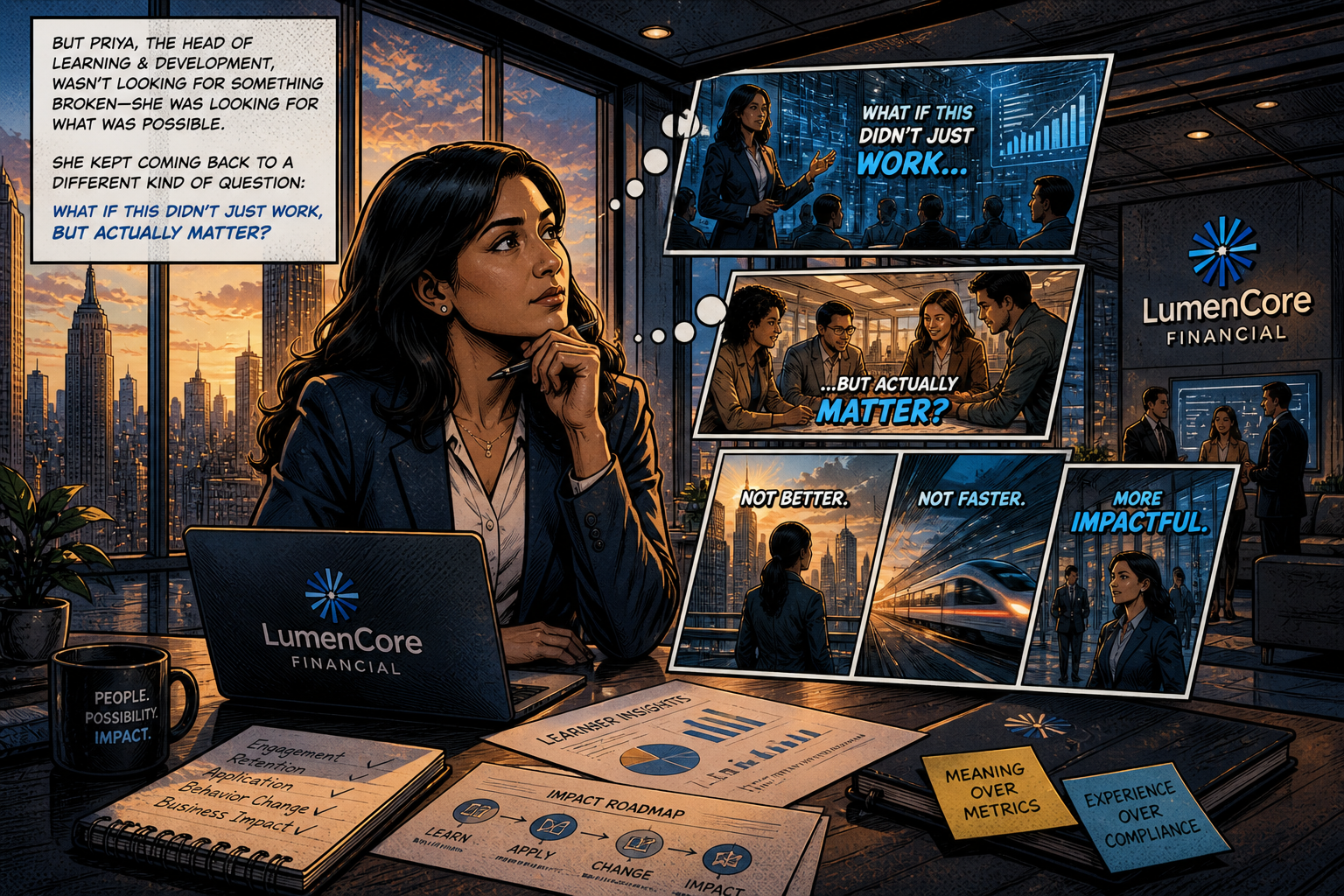
There wasn’t a clear problem to fix, which made the idea of changing anything harder to justify. But Priya, the head of Learning & Development, wasn’t looking for something broken—she was looking for what was possible.
She kept coming back to a different kind of question: what if this didn’t just work, but actually mattered?
Not better. Not faster.
More impactful.
Instead of focusing on the metrics, she started paying attention to the experience itself. On the surface, the course did everything right. It was clear, structured, and easy to navigate. But it was also predictable.
And predictability in learning doesn’t create resistance—it creates low expectations.
Learners weren’t frustrated or disengaged. If anything, they were comfortable. There was a quiet understanding the moment the course began:
I know how this goes.
And because of that, they didn’t push back or question the experience. They simply moved through it—smoothly, efficiently, and without much thought beyond getting to the end.
The Experiment in Elevation
Instead of redesigning the content, Priya focused on something else:
The experience.
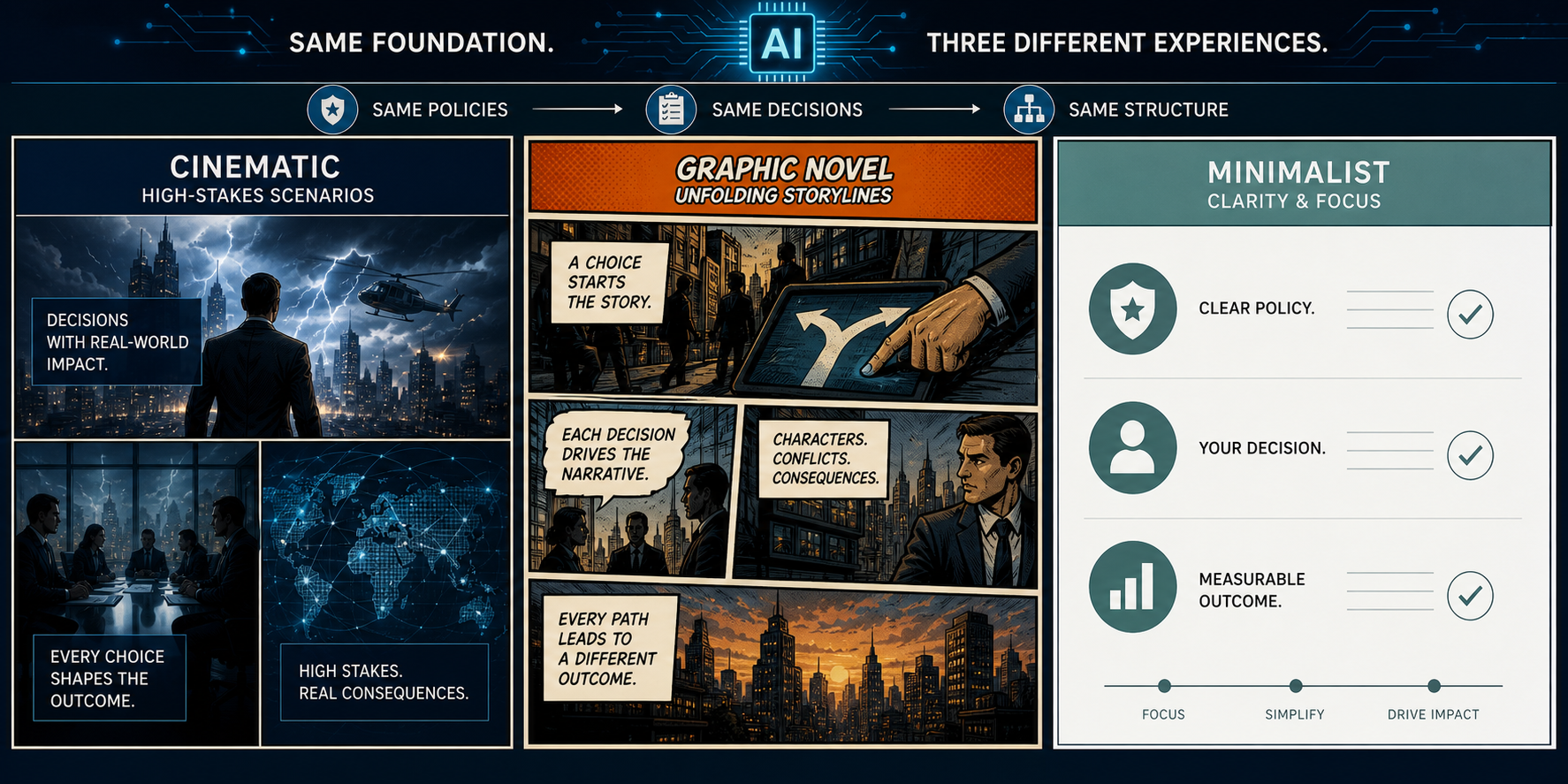
She kept the course intact—same policies, same decisions, same structure.
But rebuilt it three different ways using AI-generated visual styles:
- A cinematic version that framed decisions through realistic, high-stakes scenarios
- A graphic novel version that turned choices into unfolding storylines
- A minimalist version that sharpened clarity and reduced friction
Nothing about the what changed.
Only the how it felt.
When “Fine” Becomes “Engaging”
The results didn’t show up as dramatic spikes.
They showed up as subtle—but meaningful—shifts.
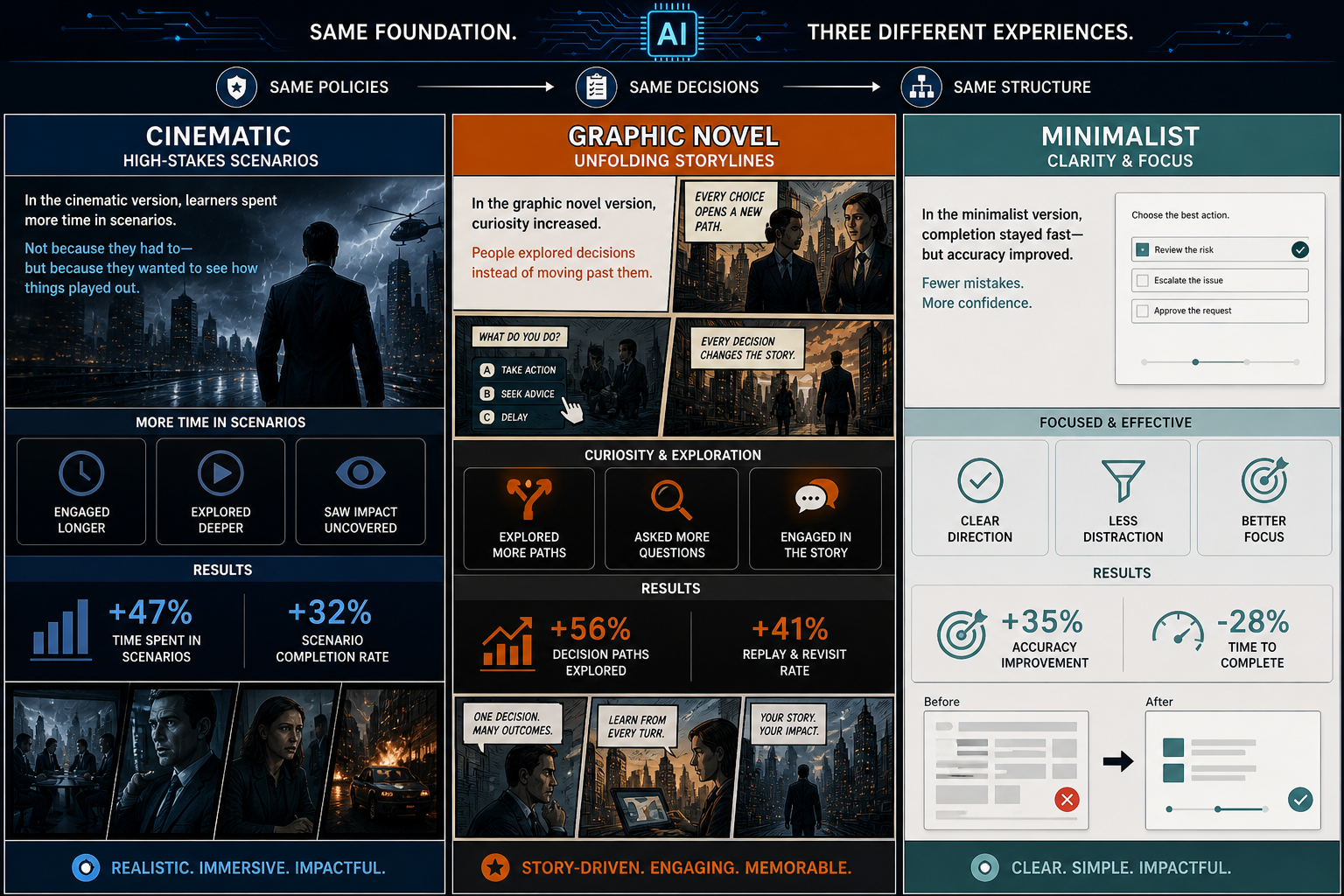
In the cinematic version, learners spent more time in scenarios. Not because they had to—but because they wanted to see how things played out.
In the graphic novel version, curiosity increased. People explored decisions instead of moving past them.
In the minimalist version, completion stayed fast—but accuracy improved. Fewer mistakes. More confidence.
The course still worked.
But now, it didn’t just get completed—it got experienced. Because the visual design changed how learners showed up, paid attention, and made decisions along the way.
Designing for What Happens After
That shift changed how the team approached every design decision moving forward.
Instead of asking, “Is this good enough to launch?”
They started asking:
“What should this stay with someone after they finish?”
“What do we want them to do differently tomorrow?”
“What kind of experience would support that?”
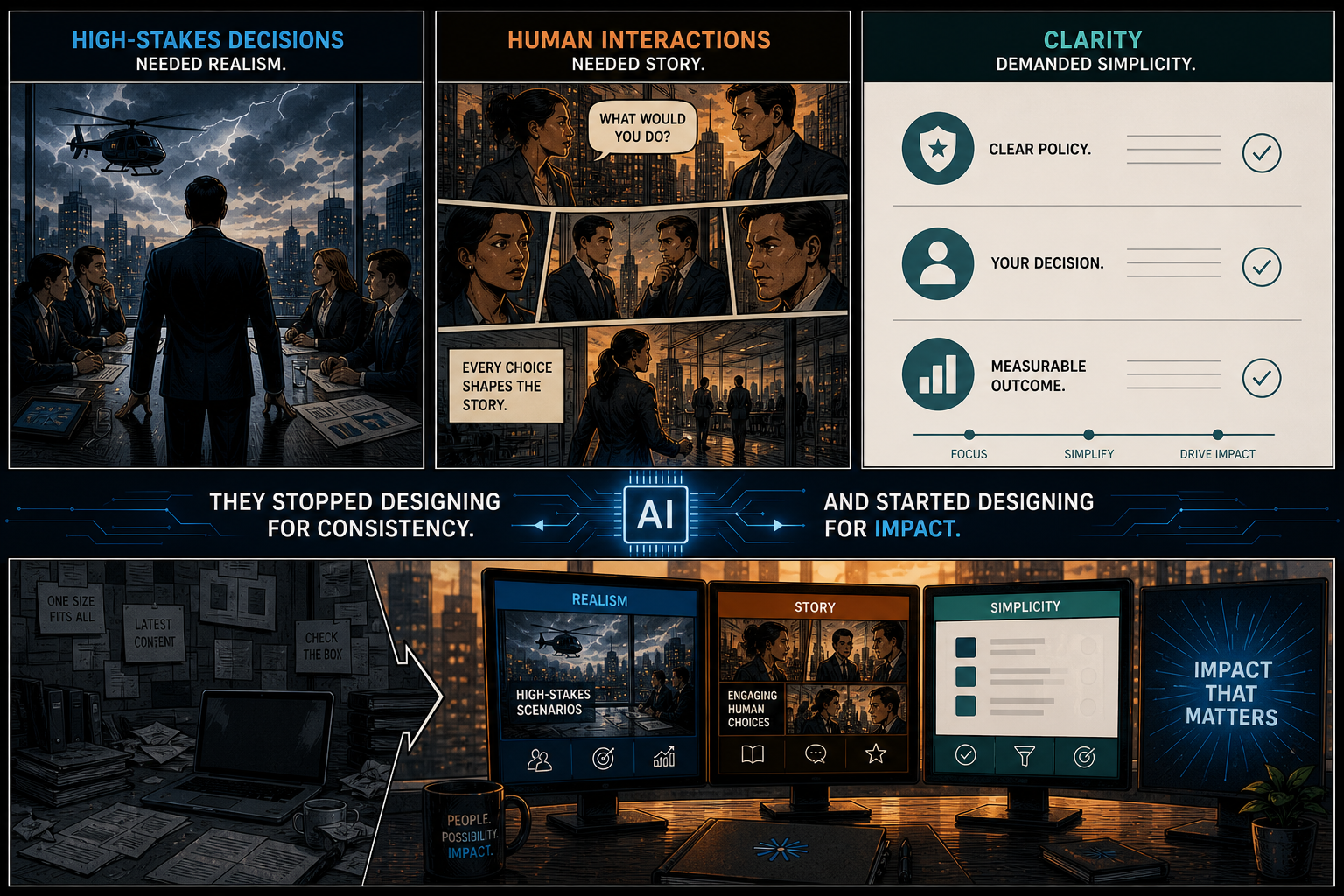
Different contexts didn’t need the same solution.
High-stakes decisions needed realism.
Human interactions needed story.
Clarity demanded simplicity.
They stopped designing for consistency.
And started designing for impact.
Because the goal was never to pick the “best” style—
It was to use the right one.
The Shift AI Made Possible
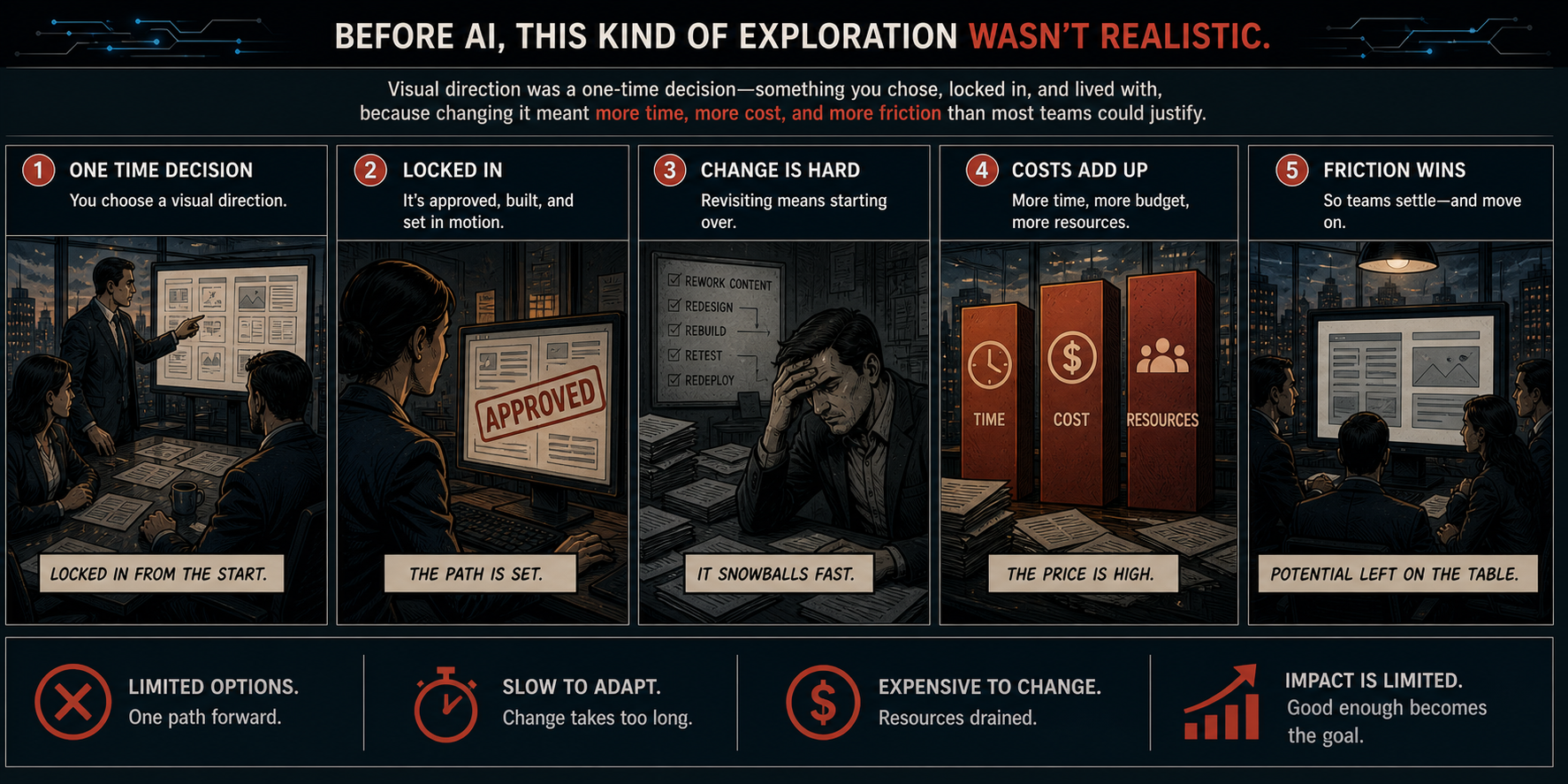
Before AI, this kind of exploration wasn’t realistic. Visual direction was a one-time decision—something you chose, locked in, and lived with, because changing it meant more time, more cost, and more friction than most teams could justify.
Now, that constraint is gone.
And with it, the bar has moved.
It’s no longer enough to build training that simply works. The expectation is higher—to create something that resonates, adapts, reflects the reality of the learner, and evolves instead of staying fixed.
Because when you have the ability to do more…“good enough” stops being acceptable.
From Function to Impact
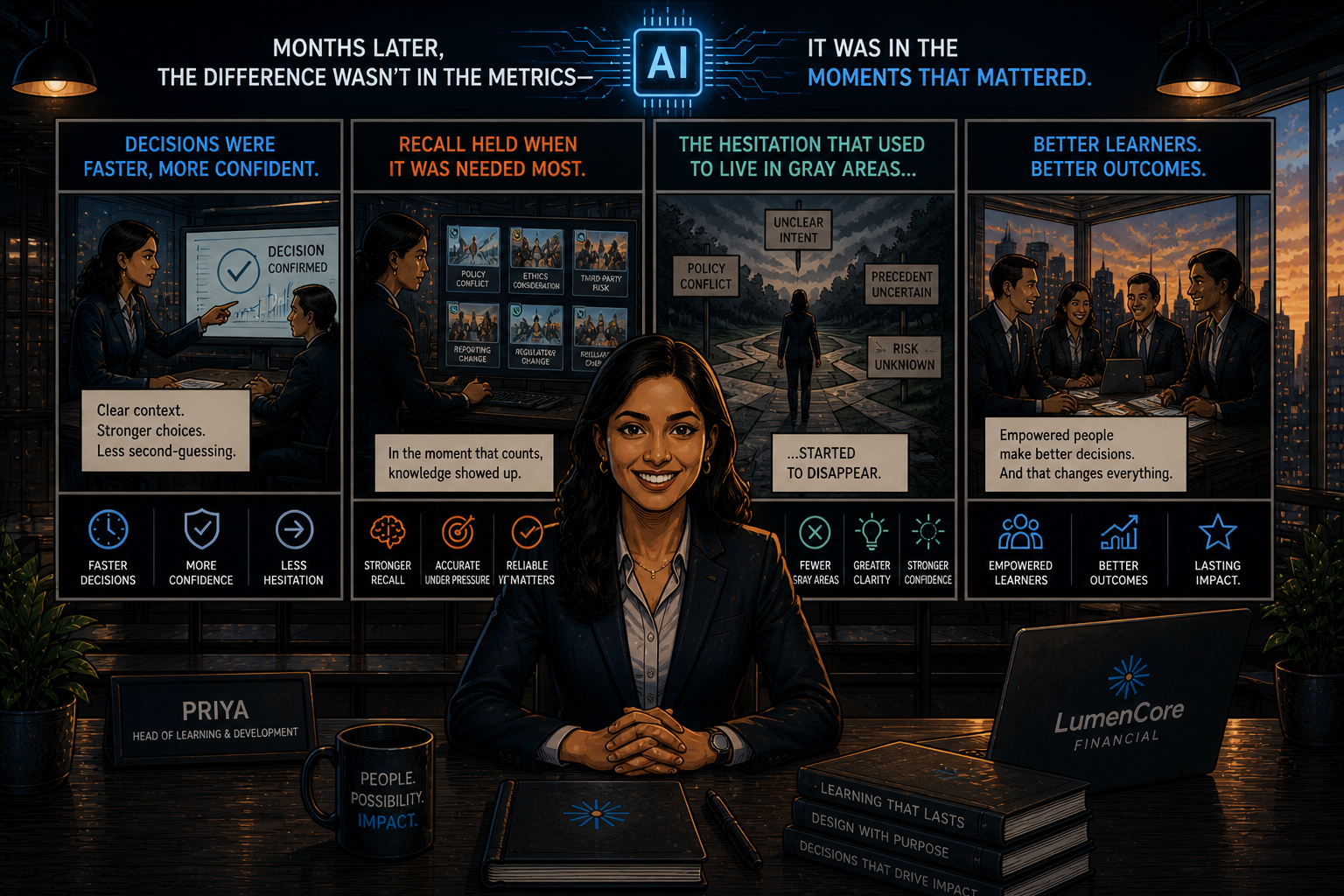
Months later, the difference wasn’t in the metrics—it was in the moments that mattered. Decisions were faster, more confident. Recall held when it was needed most. The hesitation that used to live in gray areas started to disappear.
The content hadn’t changed.
But the experience had.
And that’s what turned training from something that works… into something that actually changes behavior.
Closing
If it looks boring, it is—not because your training is failing, but because it’s settling. Settling for completion, for “good enough,” for being finished instead of being felt.
AI doesn’t just give you new tools. It raises the standard.
And in that new standard, the goal isn’t to make training that simply works—it’s to create training that resonates, influences, and ultimately thrives.
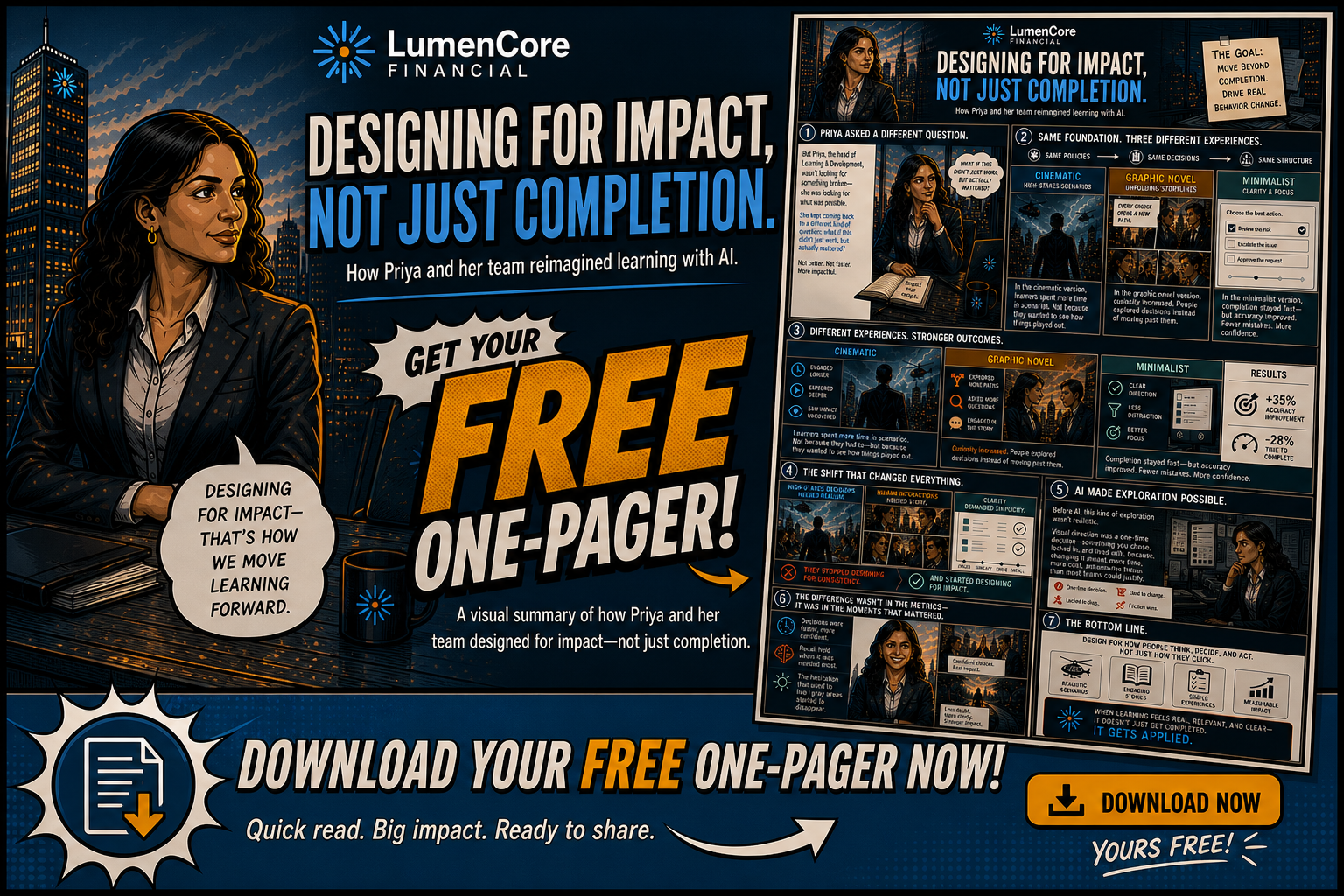
Download the LumenCore Financial case study
Free PDF — no email required