Storyline Can't Save a Bad Storyboard
Why the cheapest place to fix a learning problem is before development begins.

At Quickbuild Solutions, projects moved quickly. Meetings ended with action items. Deadlines were treated less like dates and more like dares. Around the learning team, the unofficial motto was simple:
Build fast. Launch faster.
So when Operations requested a new customer service training module, no one panicked. The goal sounded clear enough: help employees handle difficult customer conversations with more confidence, consistency, and empathy.
Nina Draftwell, the instructional designer on the project, got to work. She reviewed the policy documents, met with Greg from Operations, and built out the storyboard.
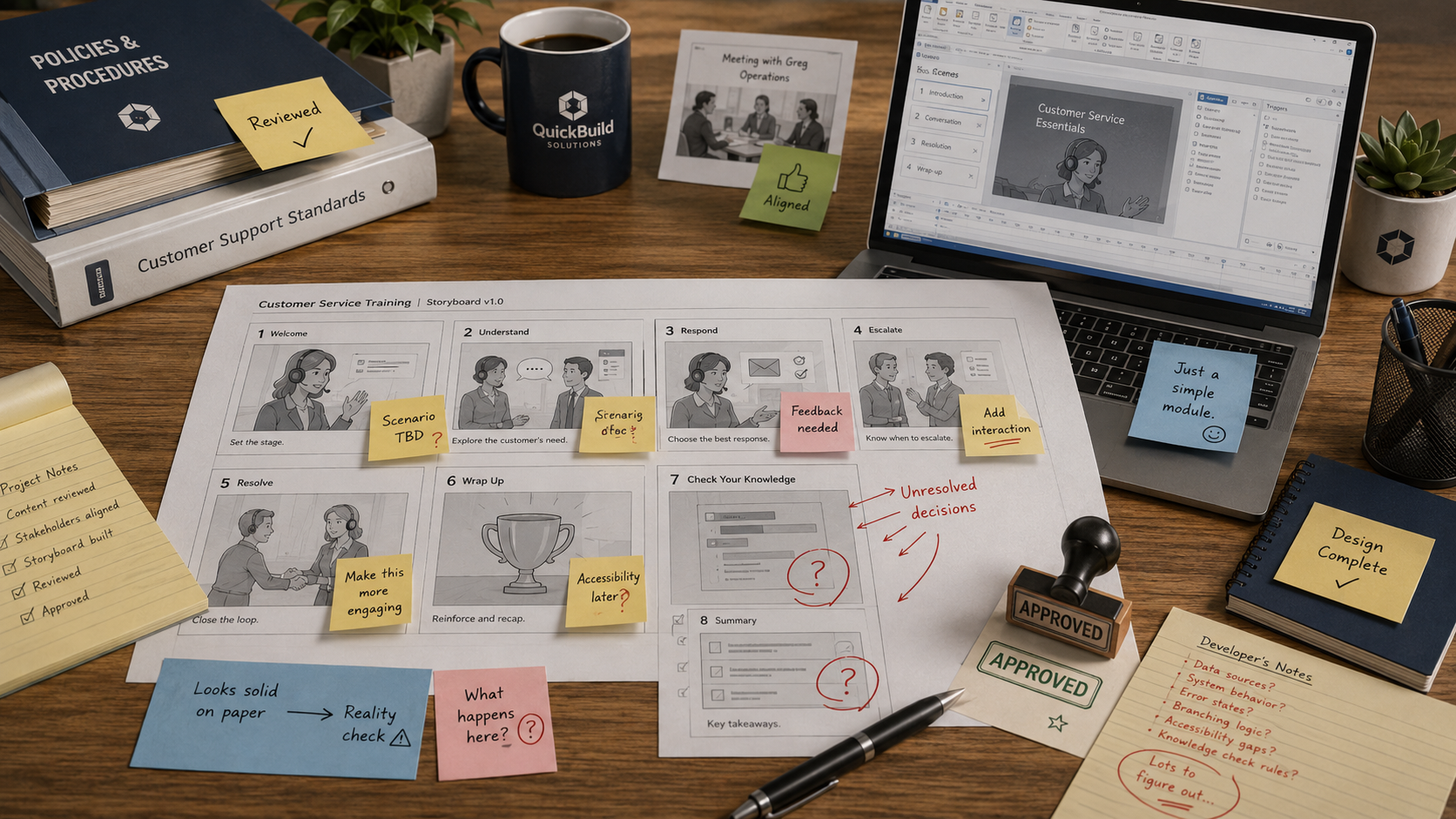
On paper, it looked solid. A few notes remained in the margins, but they seemed harmless enough; add interaction here, scenario TBD, feedback needed, make this more engaging, accessibility check later.
Greg approved it. The project manager marked the design phase complete. Someone said development should be quick because it was “just a simple module,” a phrase that should legally require dramatic thunder in the background.
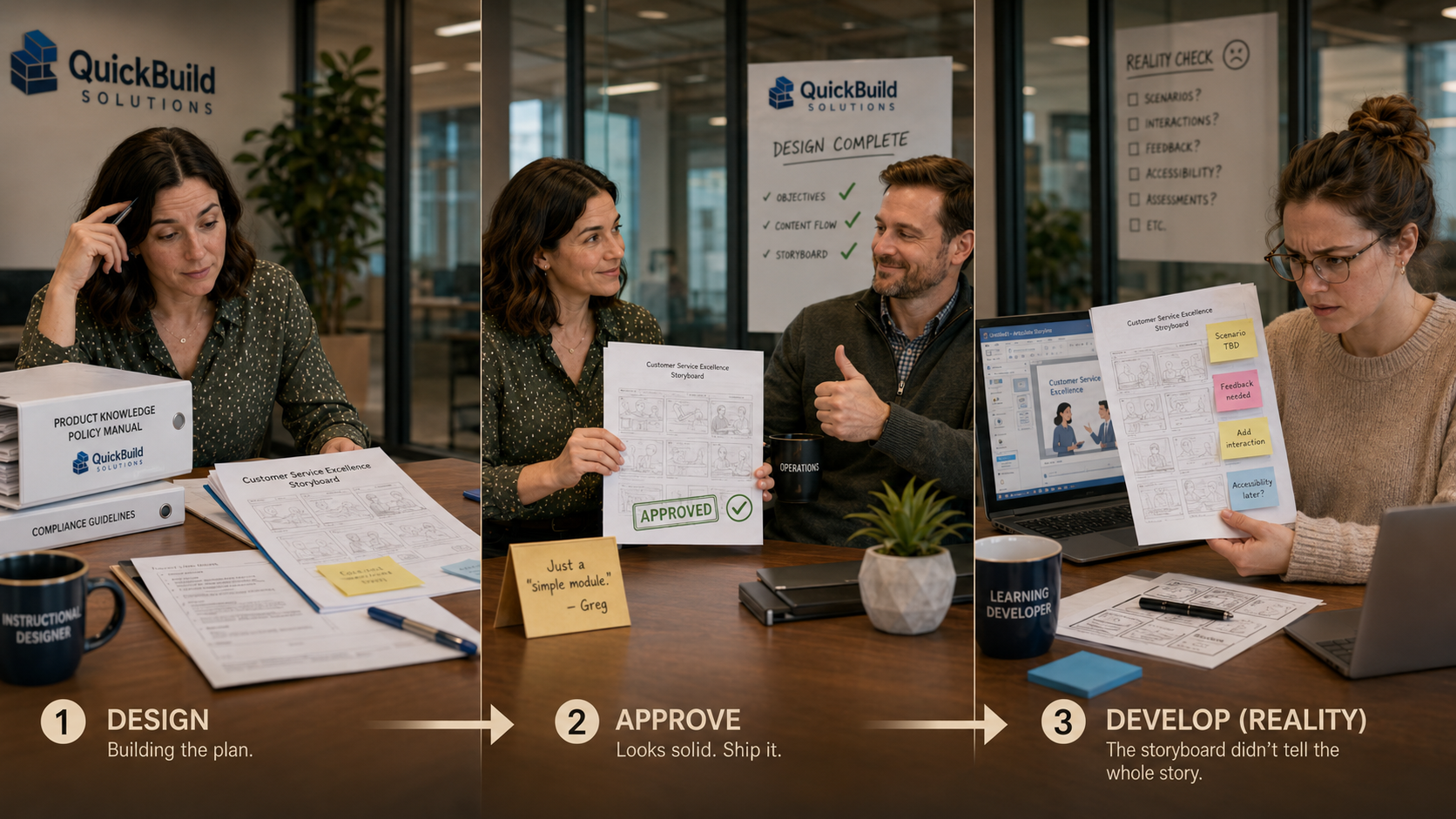
Then the storyboard landed with Tessa Triggerwell, QuickBuild’s learning developer, who opened the file, opened Storyline, and then opened the storyboard again — this time more slowly. The problem was not that the storyboard was empty; it was full of unresolved decisions.
The Storyboard Looked Finished
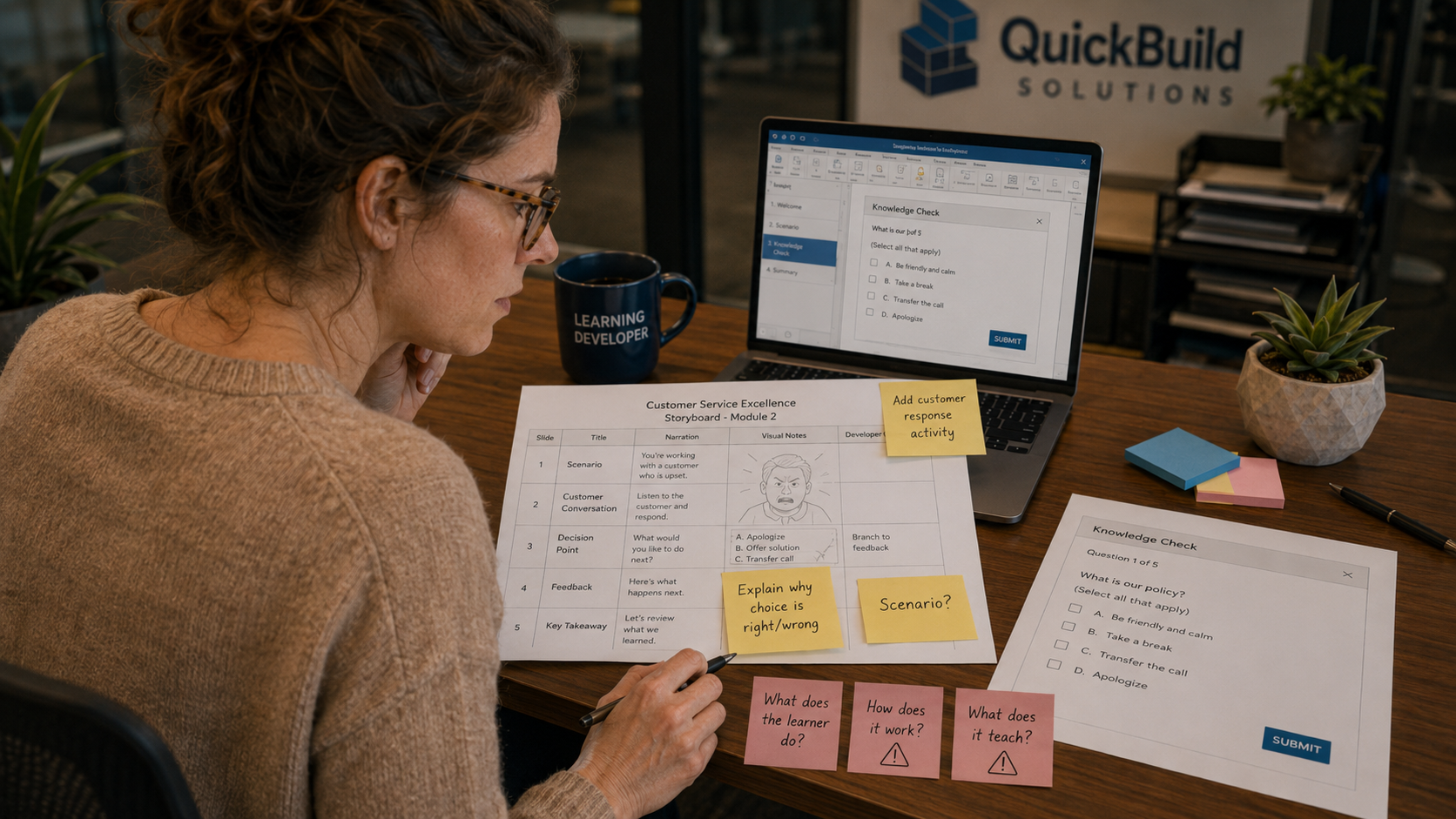
At first glance, the storyboard looked ready. It had slide titles, narration, visual notes, developer comments, and enough formatted columns to feel official.
But filling in boxes is not the same as solving the learning experience.
As Tessa reviewed it, the gaps showed quickly. “Add customer response activity” did not explain what the learner would do, how the interaction worked, or what it was meant to teach. A scenario asked learners to respond to an angry customer, but the choices were placeholders, the consequences were missing, and the feedback simply said, “Explain why choice is right/wrong.”
Technically, those were notes.
Emotionally, they were warnings.
By the quiz, the real issue was clear: the course was supposed to build judgment, but the assessment mostly checked policy recall. Storyline did not create the problem. It just made the problem harder to ignore.
Development Became Discovery
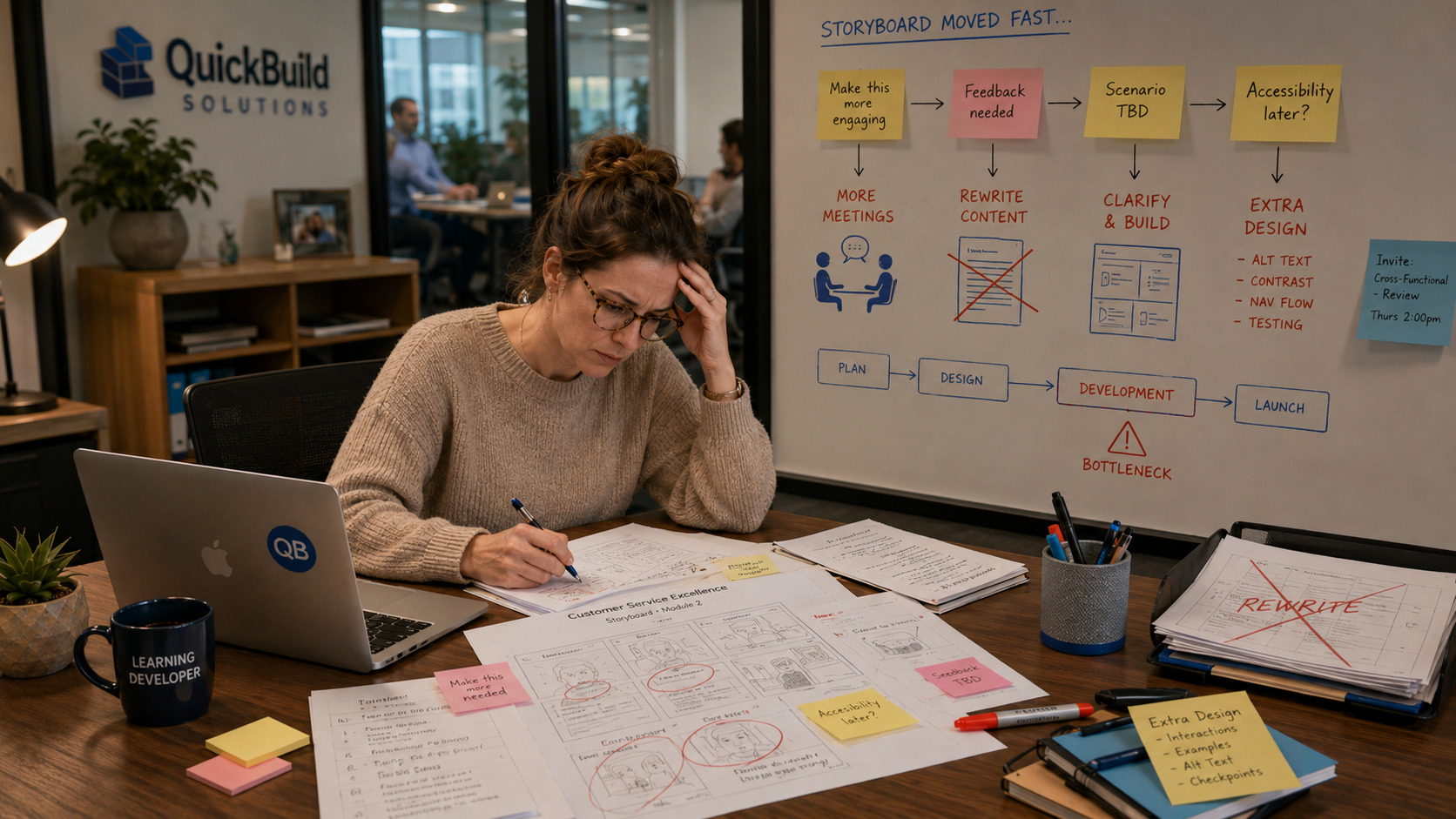
QuickBuild thought they had moved quickly through storyboarding. Really, they had moved quickly past decisions.
Every vague note became a delay.
- “Make this more engaging” became a meeting.
- “Feedback needed” became a design conversation.
- “Scenario TBD” became a rewrite.
- “Accessibility check later” became exactly as ominous as it sounds.
Tessa was no longer just building the course. She was designing what the storyboard had skipped.
That is the danger of a weak storyboard: it does not remove work. It relocates it.
And once that work moves into development, it gets heavier. Changing a line in a storyboard is easy. Changing a built interaction with layers, states, triggers, captions, alt text, review comments, and one button having a personal crisis is not. The team had not saved time. They had created something much more expensive: decision debt.
The Real Problem Was Decision Debt
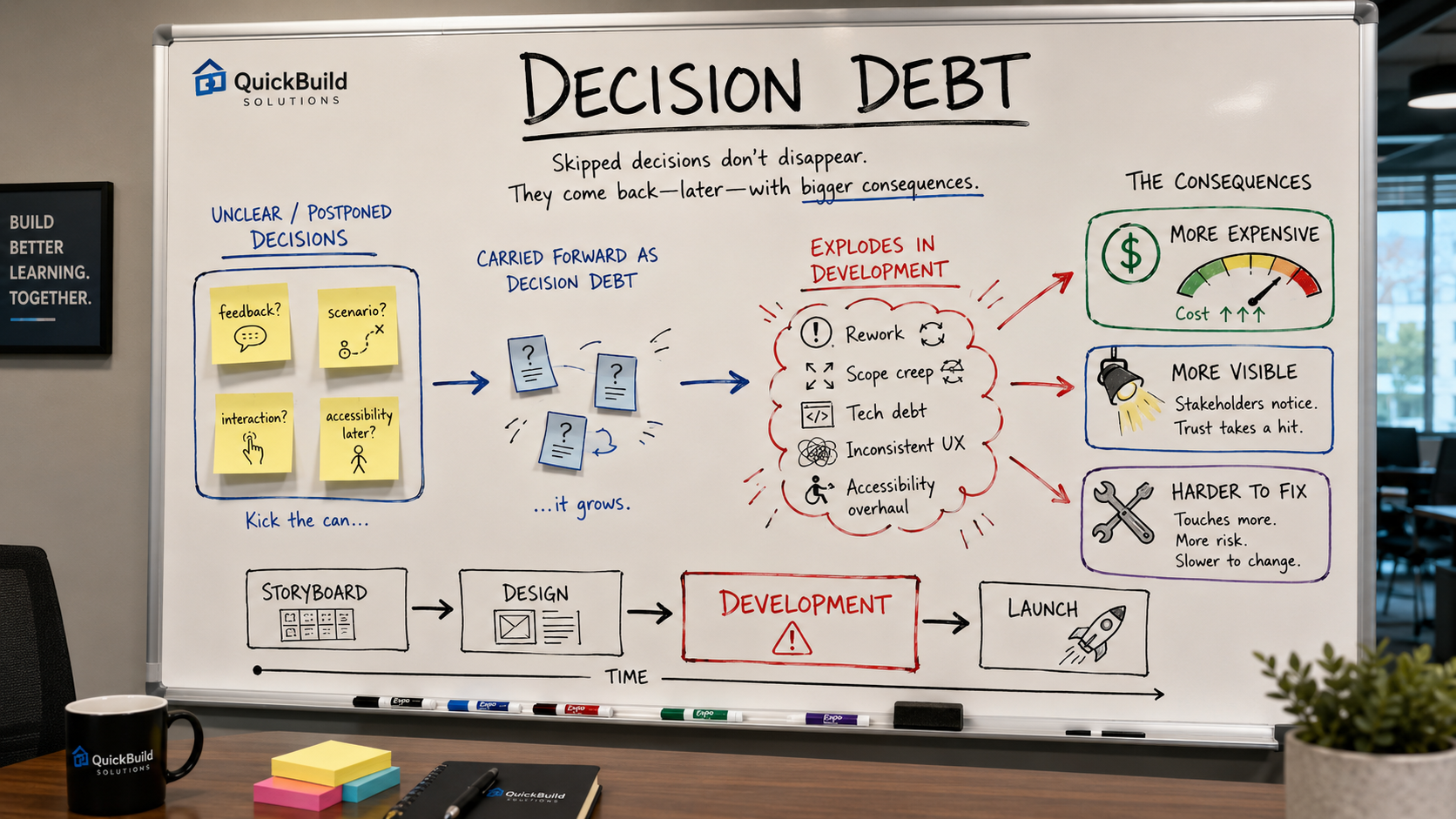
Decision debt happens when unclear learning design choices are postponed until development, where they become more expensive, more visible, and harder to fix.
QuickBuild had plenty of it.
They had not decided what the learner needed to practice. They had not defined what a strong customer response looked like. They had not written coaching feedback. They had not separated essential content from policy reference material. They had not planned how accessibility would shape the interaction design.
And perhaps most importantly, they had not made sure Greg from Operations had approved the actual learning experience.
He had approved the storyboard, yes — but mostly as content in a table.
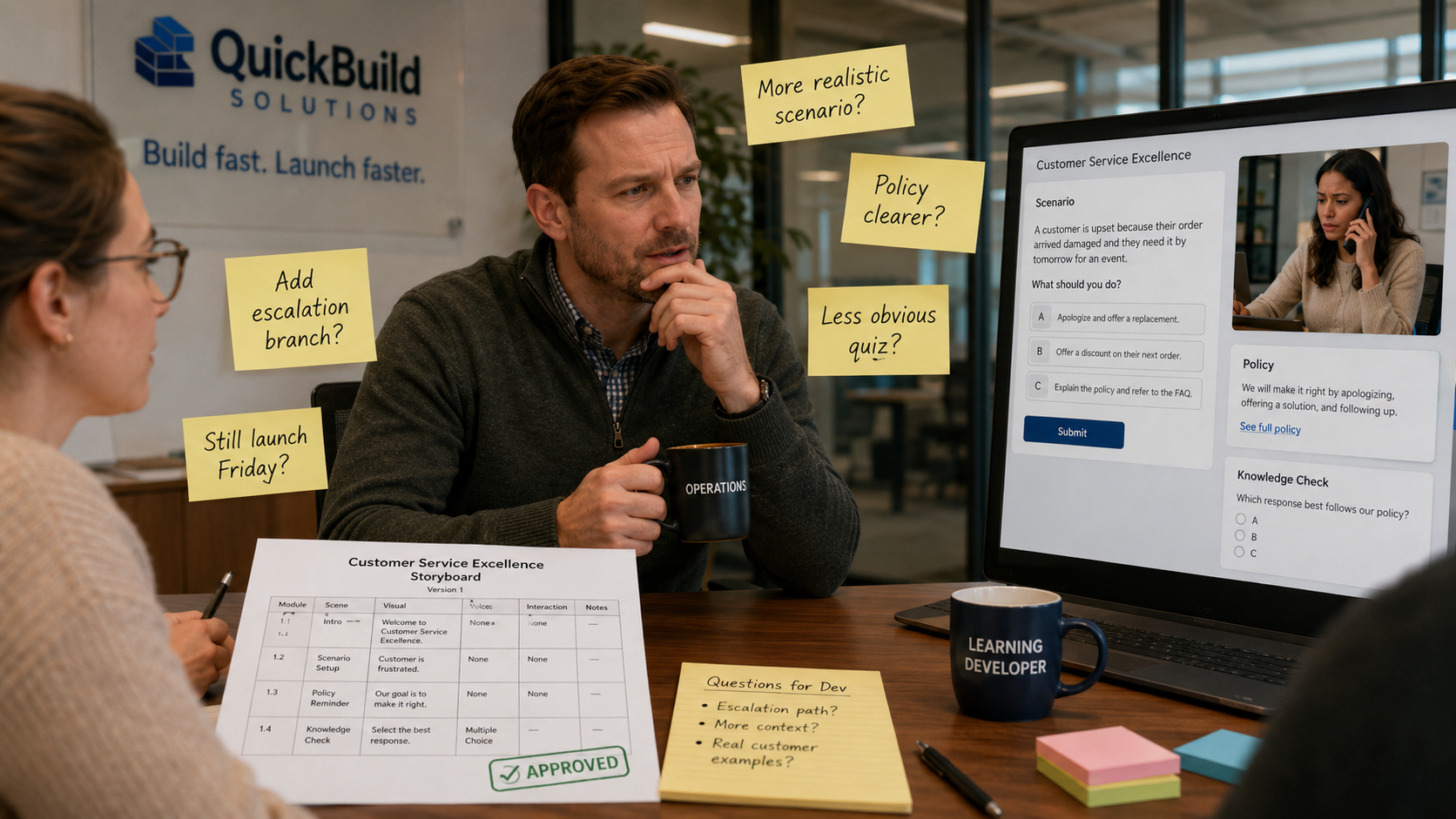
When Greg saw the first built version, he suddenly had opinions:
- Could the scenario feel more realistic?
- Could the policy language stand out more?
- Could the quiz feel less obvious?
- Could they add an escalation branch and still launch Friday?
Greg was not trying to be difficult. He was reacting to the experience for the first time because the storyboard had not made it clear enough before development began.
The Storyboard Should Catch the Chaos Early
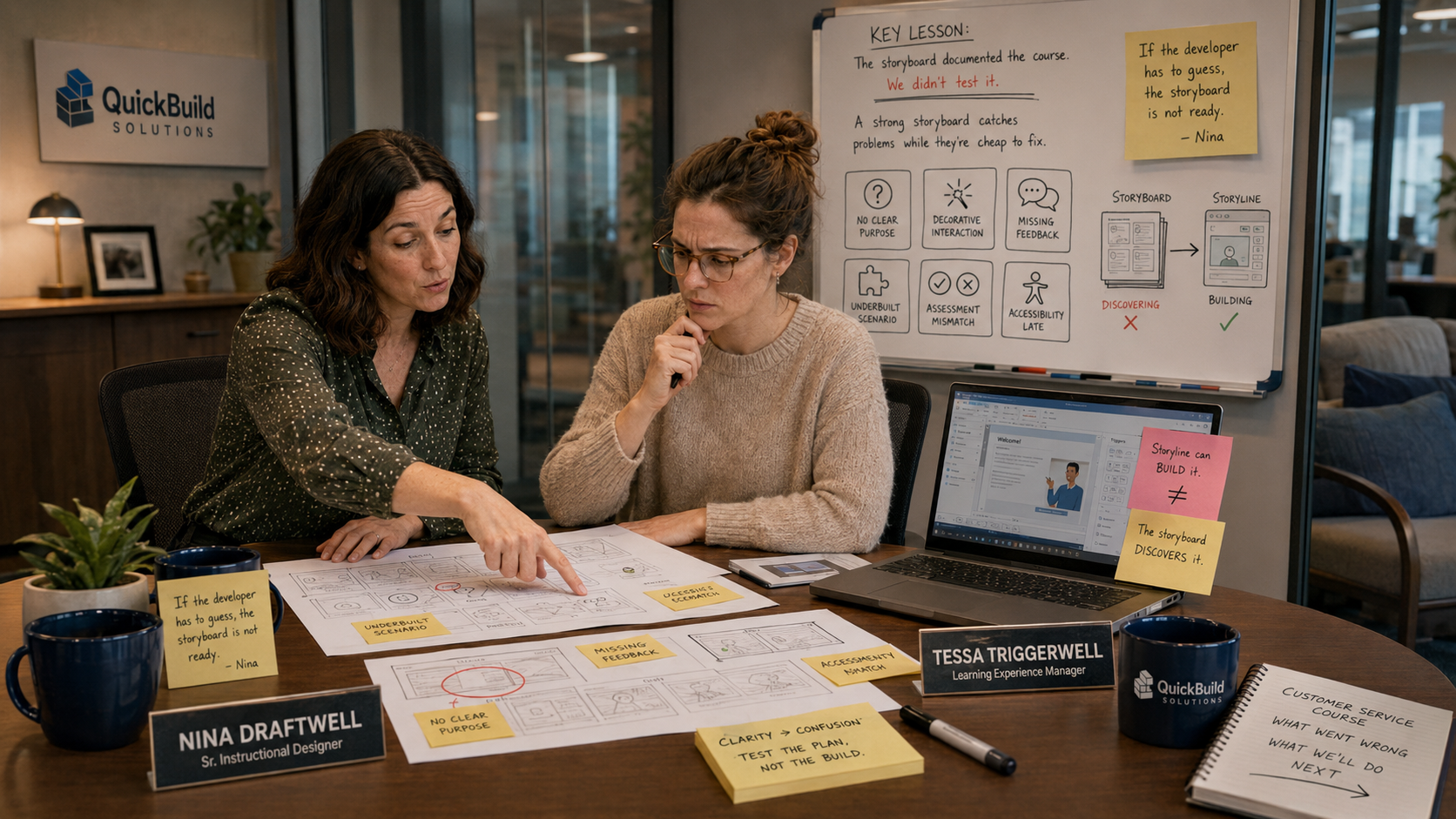
After the customer service course nearly became a small municipal emergency, Nina and Tessa reviewed what went wrong and landed on an uncomfortable truth: the storyboard had documented the course, but it had not tested it.
A strong storyboard should catch problems while they are still cheap to fix. It should reveal when a screen has no clear purpose, when an interaction decorates instead of teaches, when feedback is missing, when a scenario is underbuilt, when the assessment does not match the objective, or when accessibility has been treated like final polish instead of a design requirement.
It should also protect the developer from becoming a mind reader with a trigger panel. That became Nina’s new rule: If the developer has to guess, the storyboard is not ready.
Development can solve plenty of problems, but it should not be the first place the learning strategy becomes visible.
Storyline can build the course; it should not have to discover it.
The Storyboard Stress Test
For the next project, QuickBuild changed the handoff.
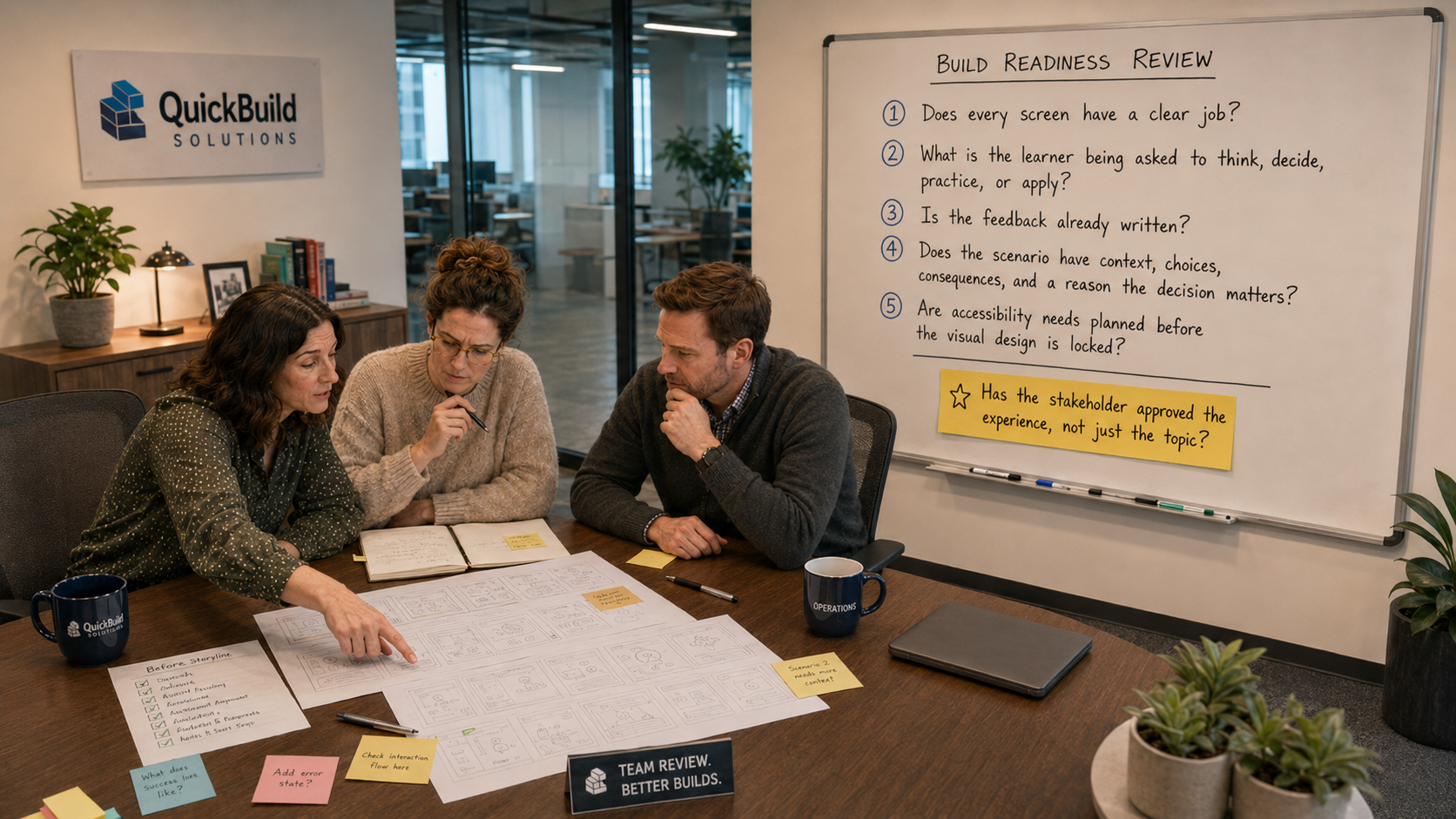
Before anything moved into Storyline, Nina, Tessa, and Greg reviewed the storyboard together. Not just for content approval, but for build readiness.
They asked better questions.
- Does every screen have a clear job?
- What is the learner being asked to think, decide, practice, or apply?
- Is the feedback already written?
- Does the scenario have context, choices, consequences, and a reason the decision matters?
- Are accessibility needs planned before the visual design is locked?
And maybe the most important question: Has the stakeholder approved the experience, not just the topic?
The process did not make storyboarding slower. It made the right parts more intentional.
The team still moved quickly.
They just stopped moving vaguely.
Fix It Before It Gets Expensive
Storyline is powerful. It can create branching scenarios, layered interactions, variables, custom navigation, polished visuals, and beautiful learning experiences.
But it cannot rescue a storyboard that never made the hard decisions.
- It cannot turn vague content into meaningful practice.
- It cannot invent strong feedback from a blank column.
- It cannot fix a scenario no one fully designed.
- It cannot make “make this engaging” into a strategy without someone doing the actual design work.
A good storyboard does not slow development down.
It keeps development from becoming damage control.
At QuickBuild Solutions, the team eventually learned that speed was not the enemy. The real problem was skipping clarity and calling it efficiency.
Because the cheapest place to fix a learning problem is before someone has built 42 layers around it.
So yes, build fast. Launch faster. But first, fix the storyboard.
Download the Storyline Stress Test workbook
Free PDF — no email required