AI Won’t Replace Learning Designers—But It Will Replace Bad Learning
How SlideCo Industries Finally Escaped the Slide Deck Era
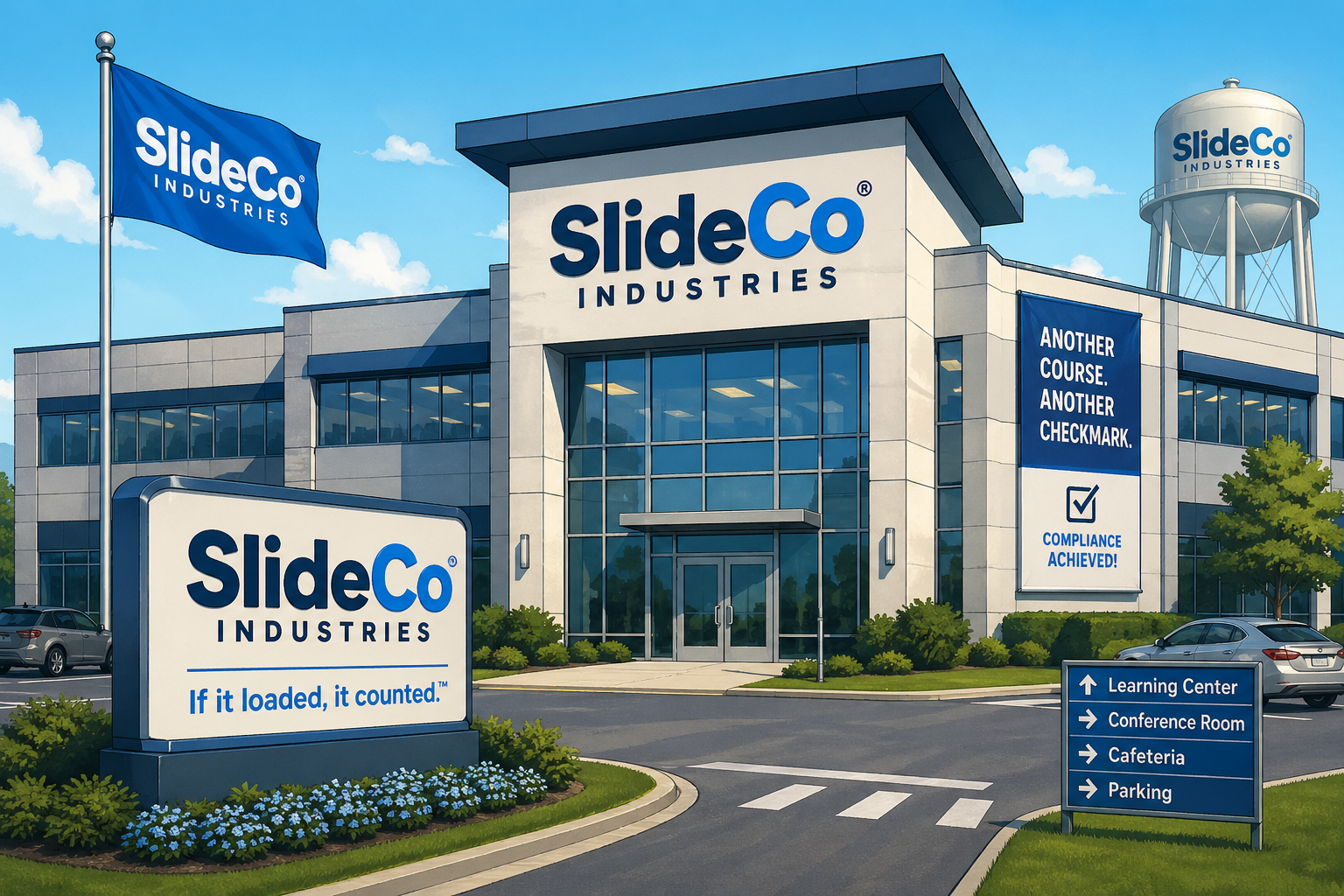
At SlideCo Industries, training operated on a simple philosophy: If it loaded, it counted.
Each quarter, employees were assigned another mandatory course built from the same dependable ingredients: dense slides, generic office imagery, flat narration, and a quiz designed mainly to prove everyone had reached the final screen.
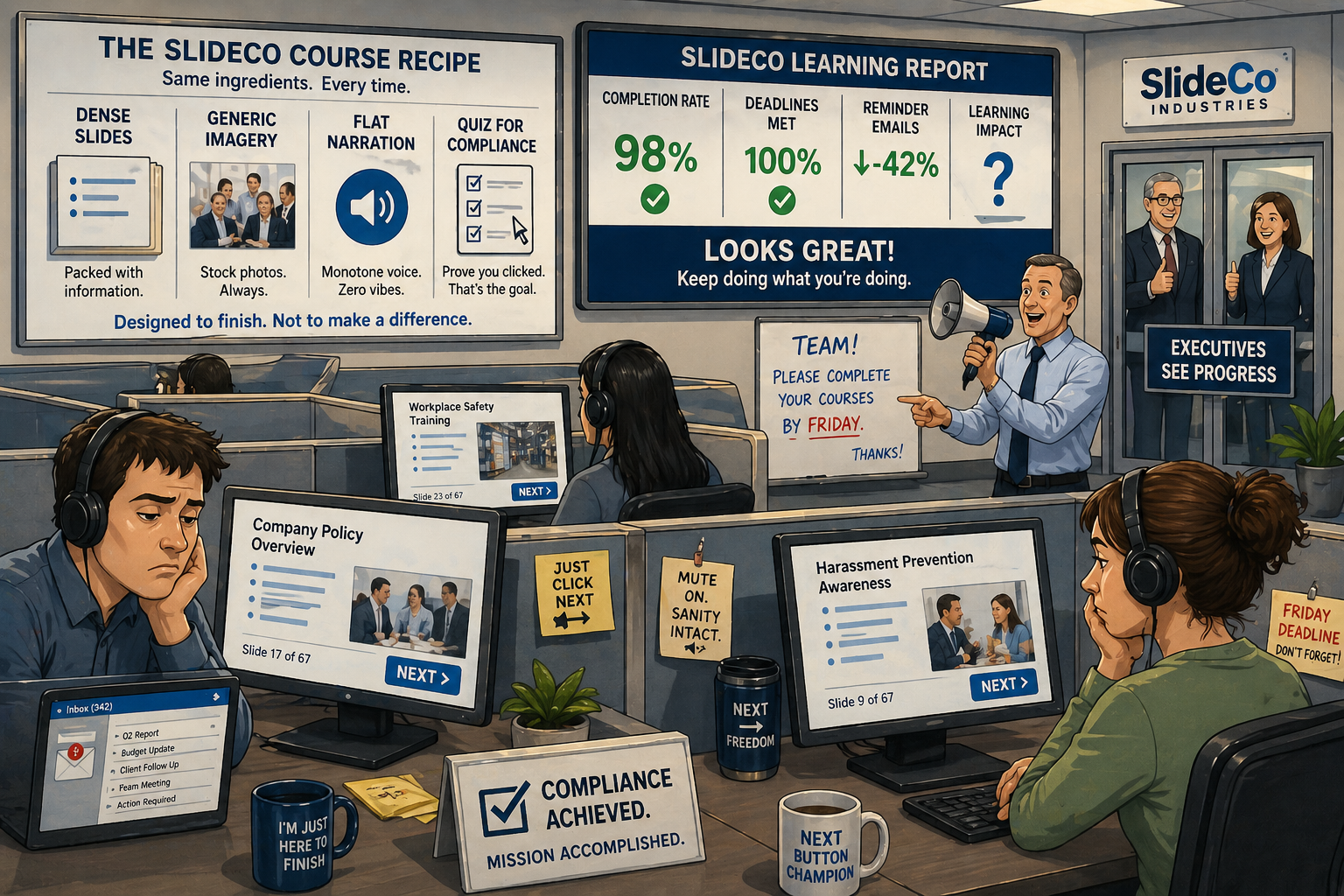
Completion rates were excellent, deadlines were met, and reminder emails decreased. Whether anyone had learned something useful remained an open question.
Employees completed modules on mute while answering emails. Managers reminded teams to finish by Friday. Nobody expected training to help. They only expected it to end.
Managers saw compliance. Executives saw progress. The workforce mostly saw the Next button.
And like many organizations, SlideCo confused finished training with effective training.
Then Zara Brightmind Arrived
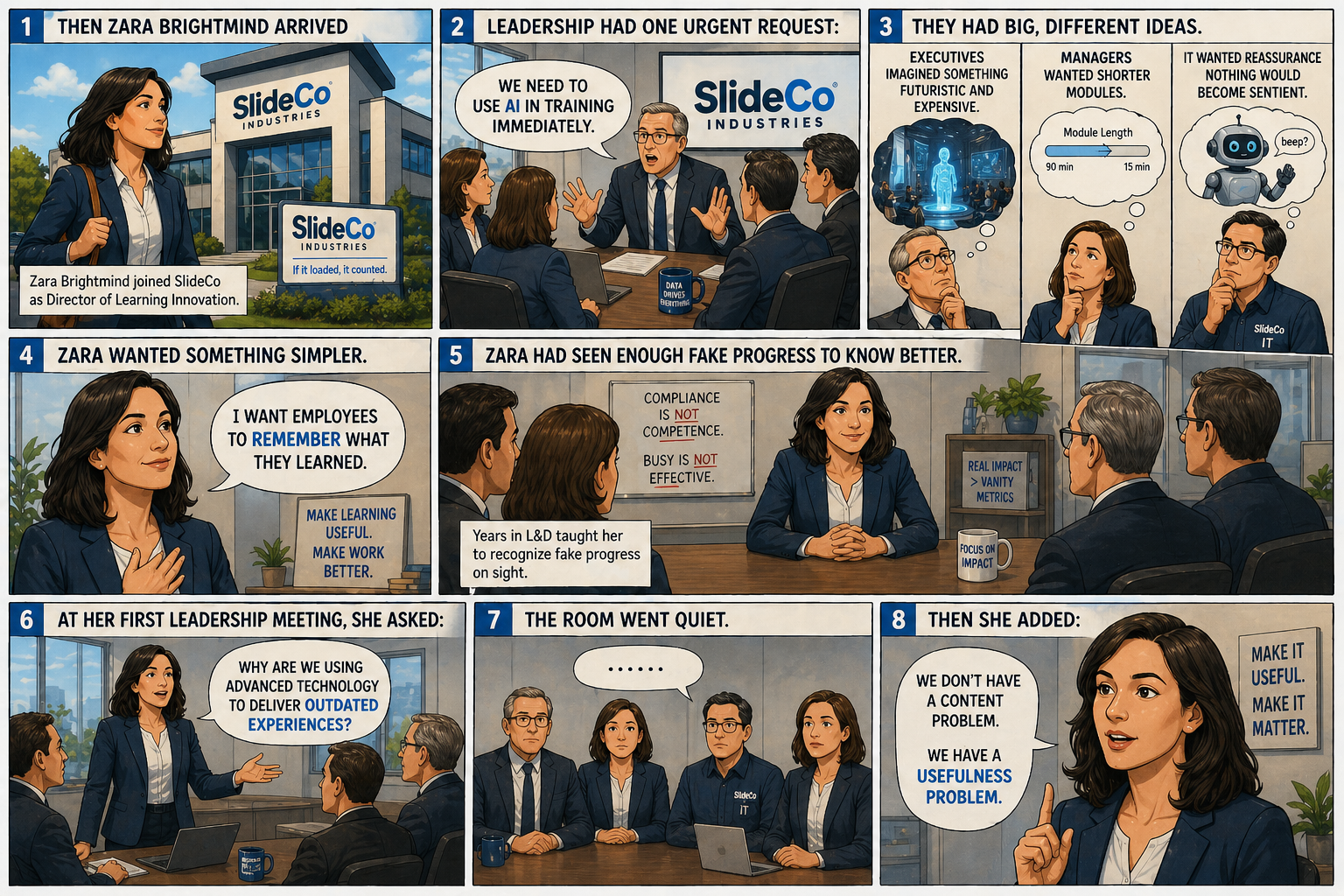
When Zara Brightmind joined SlideCo as Director of Learning Innovation, leadership gave her one urgent request: “We need to use AI in training immediately.”
Executives imagined something futuristic and expensive. Managers wanted shorter modules. IT wanted reassurance nothing would become sentient.
Zara wanted something simpler. She wanted employees to remember what they learned.
Zara had spent enough years in learning and development to recognize fake progress on sight. At her first leadership meeting, she asked, “Why are we using advanced technology to deliver outdated experiences?”
The room went quiet.
Then she added, “We don’t have a content problem. We have a usefulness problem.”
The First Attempt Failed Beautifully
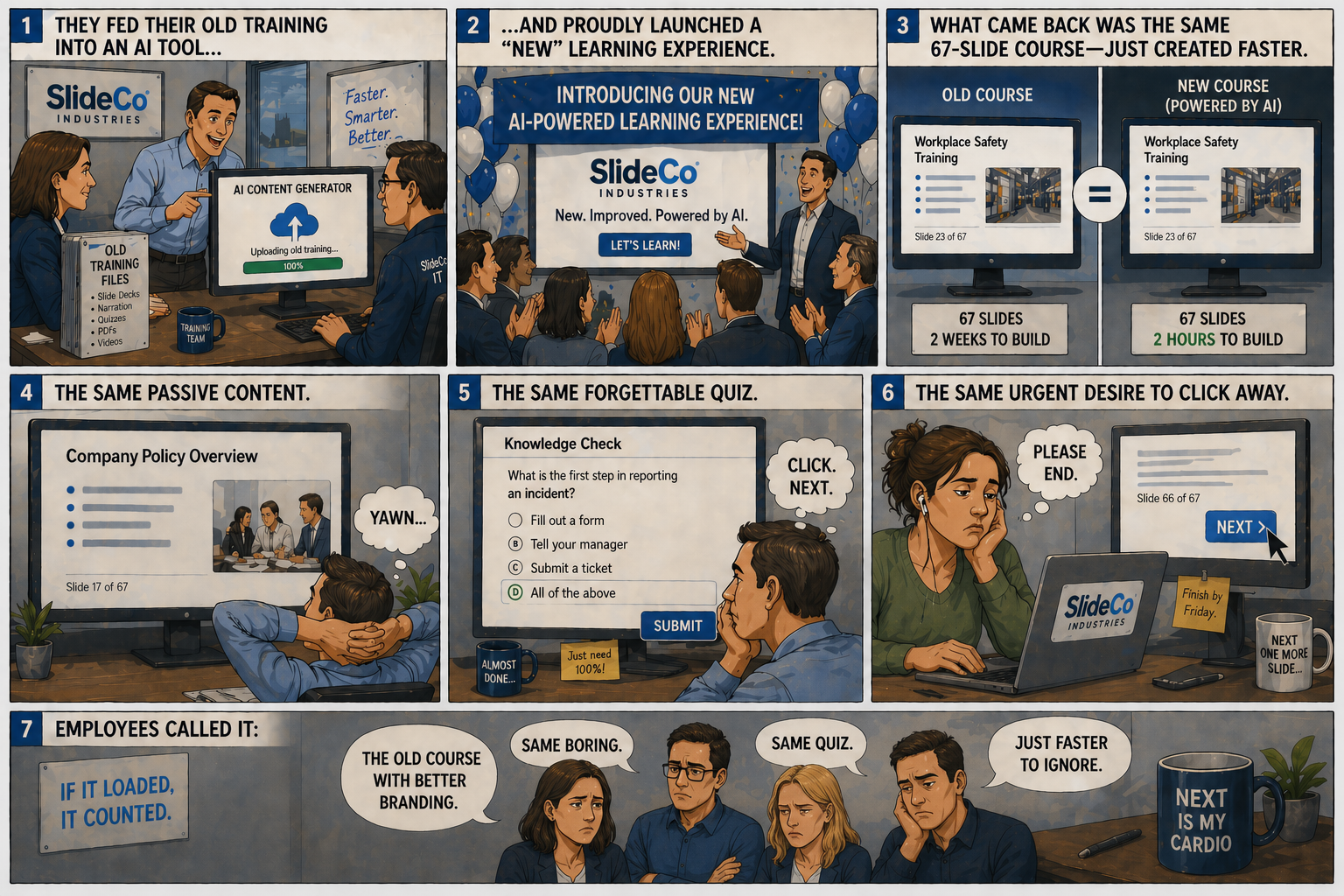
SlideCo moved fast.
They fed their old training into an AI tool and proudly launched a “new” learning experience.
What came back was the same 67-slide course—just created faster. The same passive content. The same forgettable quiz. The same urgent desire to click away.
Employees called it: “The old course with better branding.”
They were right.
AI can absolutely improve learning. It can also help companies scale boring at record speed.
Zara Changed the Question
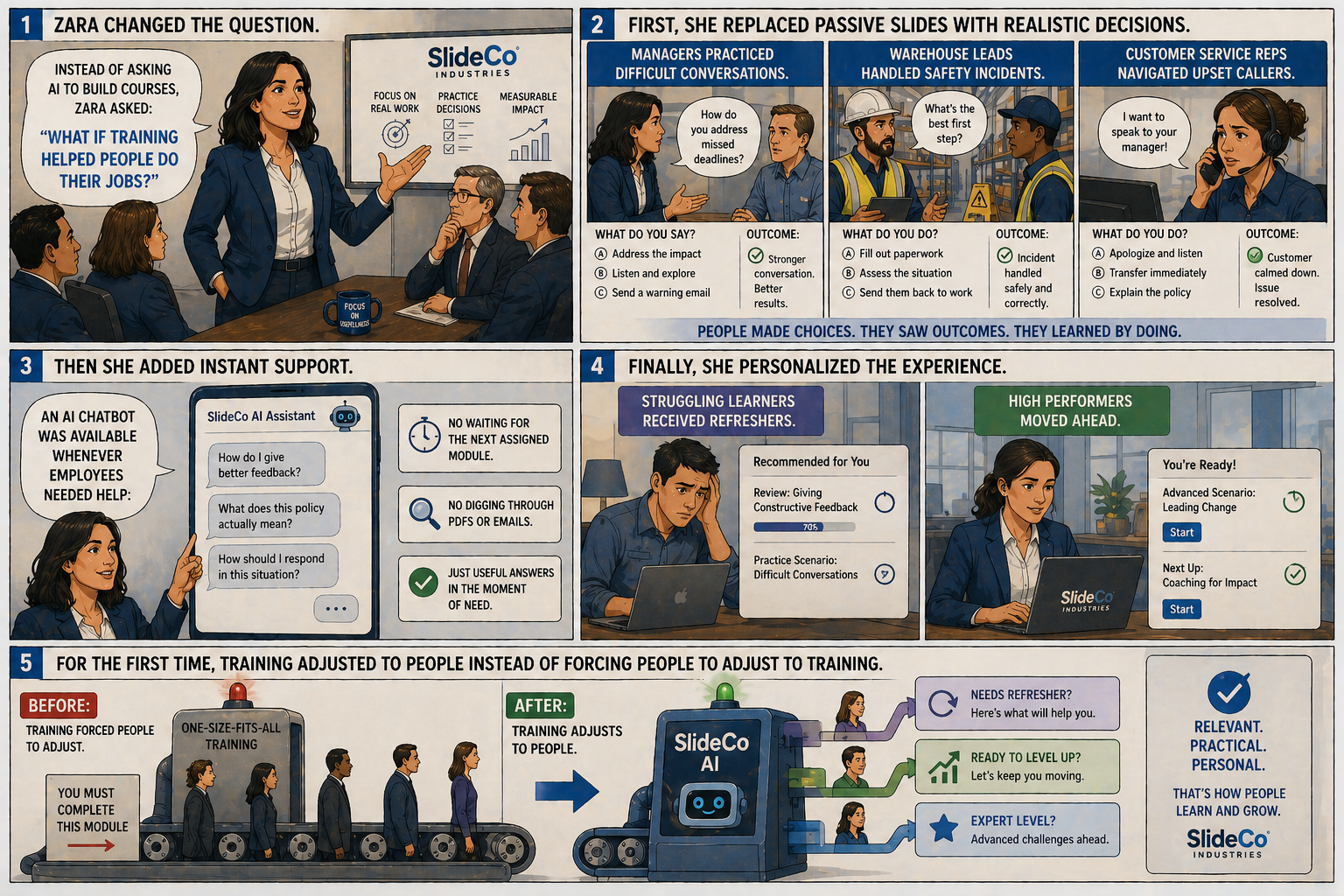
Instead of asking AI to build courses, Zara asked: “What if training helped people do their jobs?”
First, she replaced passive slides with realistic decisions
- Managers practiced difficult conversations.
- Warehouse leads handled safety incidents.
- Customer service reps navigated upset callers.
People made choices. They saw outcomes. They learned by doing.
Then she added instant support.
An AI chatbot was available whenever employees needed help:
- How do I give better feedback?
- What does this policy actually mean?
- How should I respond in this situation?
No waiting for the next assigned module. No digging through PDFs.
Just useful answers in the moment of need.
Finally, she personalized the experience.
- Struggling learners received refreshers.
- High performers moved ahead.
For the first time, training adjusted to people instead of forcing people to adjust to training.
Six Months Later
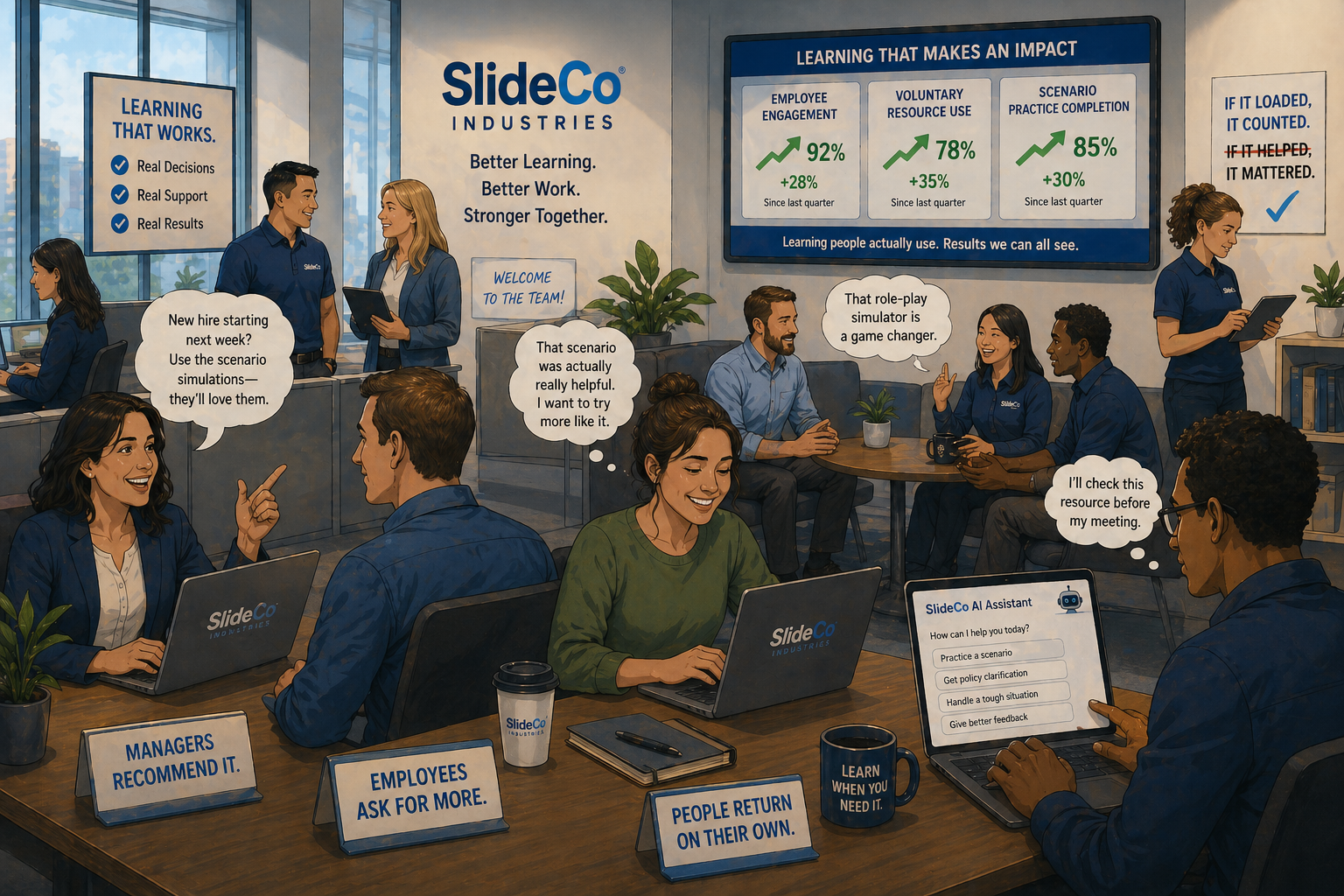
New hires ramped faster. Managers felt more confident. Support tickets dropped. Retention improved.
But the real signal was cultural.
Managers started recommending the tools to new hires. Employees asked for more scenario practice. People voluntarily returned to learning resources without being chased by reminder emails.
Training was no longer something assigned. It had become something useful.
The Real Lesson
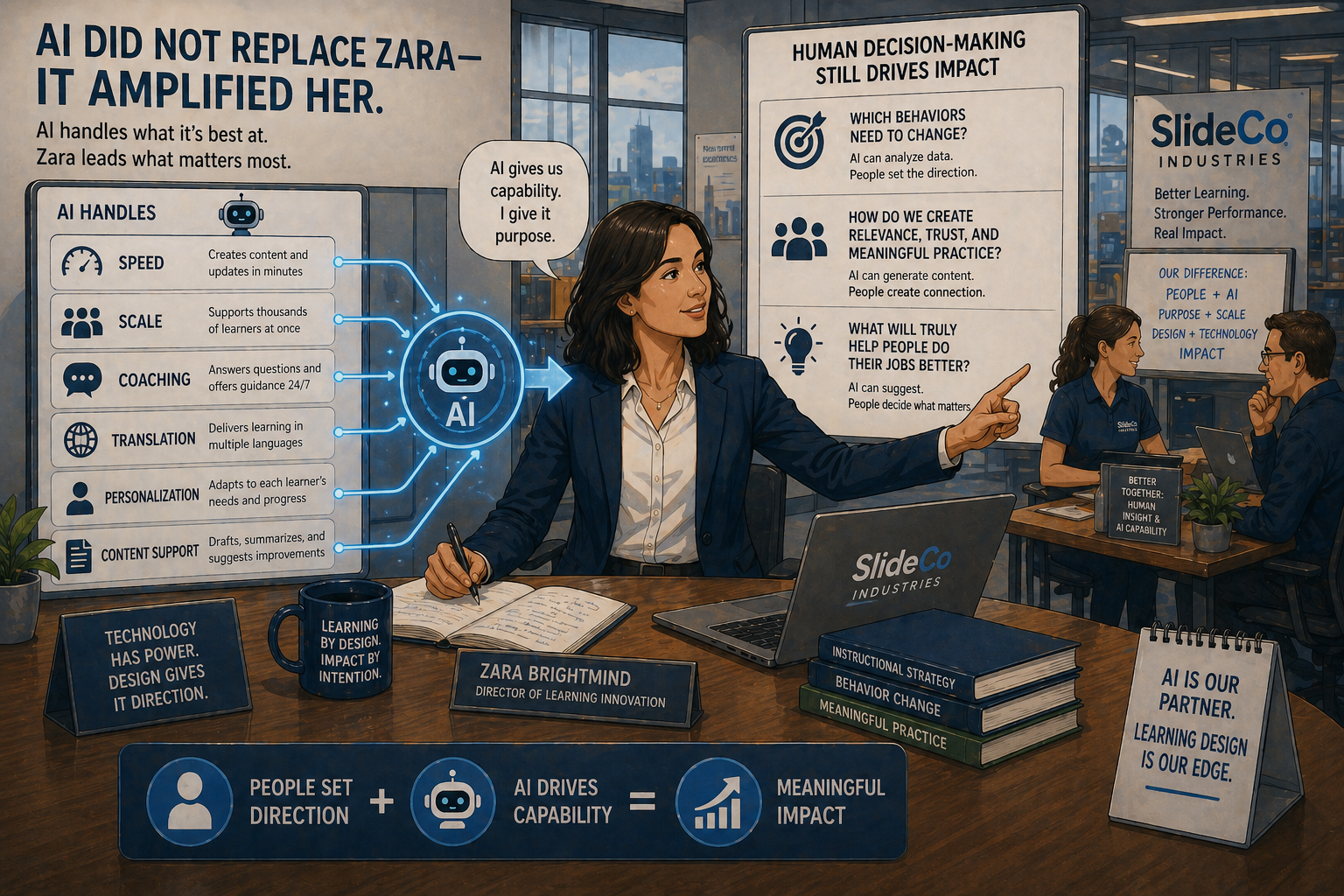
AI did not replace Zara—it amplified her. It handled speed, scale, coaching, translation, personalization, and content support, but it could not decide which behaviors needed to change or how to create relevance, trust, and meaningful practice. Those decisions still required a learning designer.
Because people are not resisting learning.
They are resisting bad learning.
What AI Will Replace
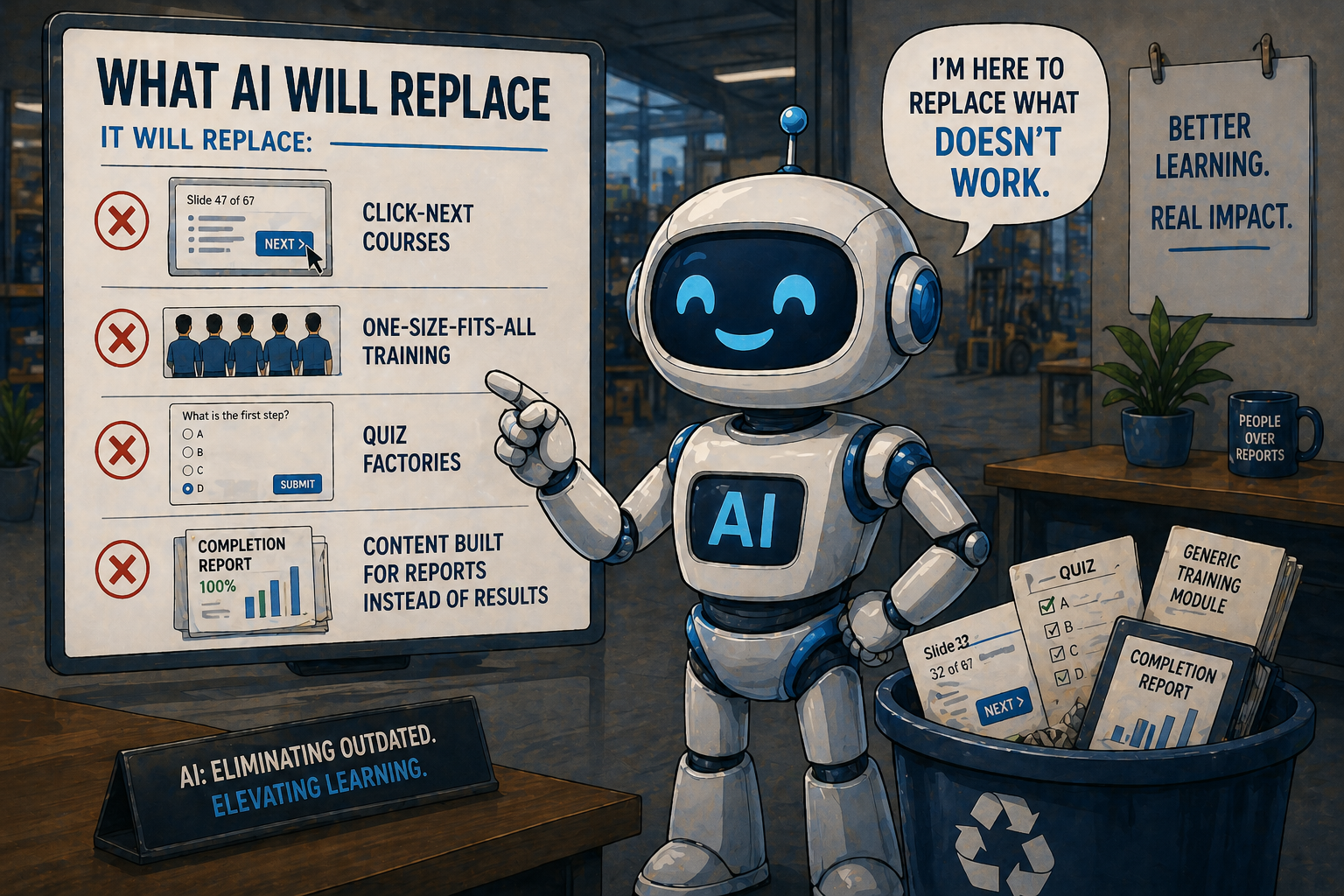
It will replace:
- Click-next courses
- One-size-fits-all training
- Quiz factories
- Content built for reports instead of results
In short, AI won’t replace eLearning designers…but it will replace bad eLearning.
Final Thoughts
Average companies will use AI to make more training.
Smart companies will use AI to make training matter.
AI won’t rescue bad learning.
It will expose it.
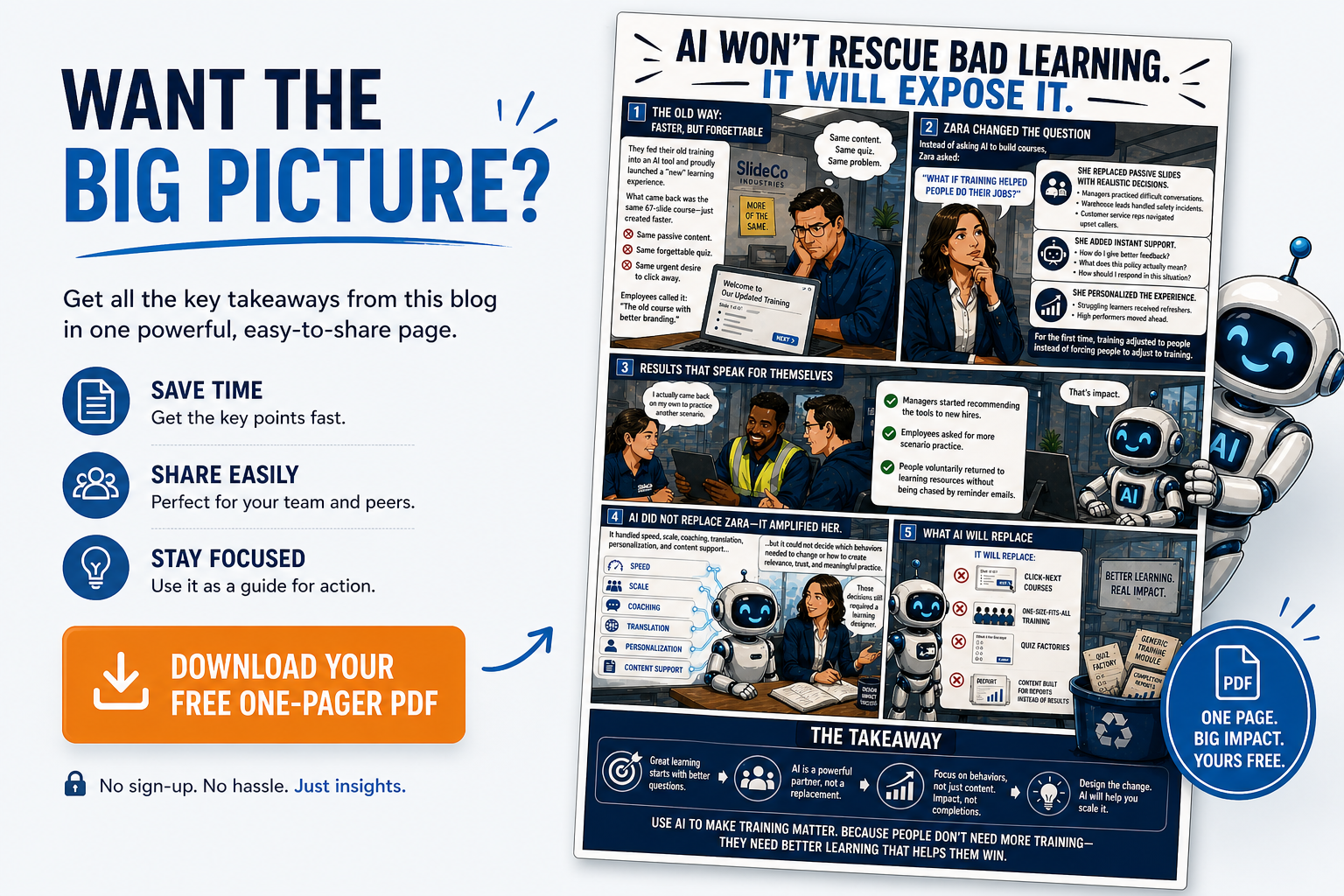
Download the SlideCo Industries case study
Free PDF — no email required