The Future of Learning Looks More Like Netflix Than PowerPoint
How StreamFlix Industries Turned Training Into Must-Watch Content
At StreamFlix Industries, corporate training had become white noise. Employees clicked through modules the same way people accept software updates—quickly, reluctantly, and without reading a thing. Completion rates looked fine. Retention was another story.
The Learning & Development team tried every fix: longer courses, shorter courses, more slides, fewer slides, even a narrator who sounded suspiciously enthusiastic. Nothing worked.
Until one fateful morning, Chief Learning Officer Darla Bingeworthy stormed into the conference room holding a remote control and dangerous levels of confidence.
“What if training felt less like paperwork… and more like something people actually wanted to come back to?”
The room lit up. Eyes widened. Ideas started flying. Laptops opened, notes were scribbled, and the team got to work immediately.
A few months later, mandatory training had become must-watch content.
Episode One: The Death of the 60-Minute Module
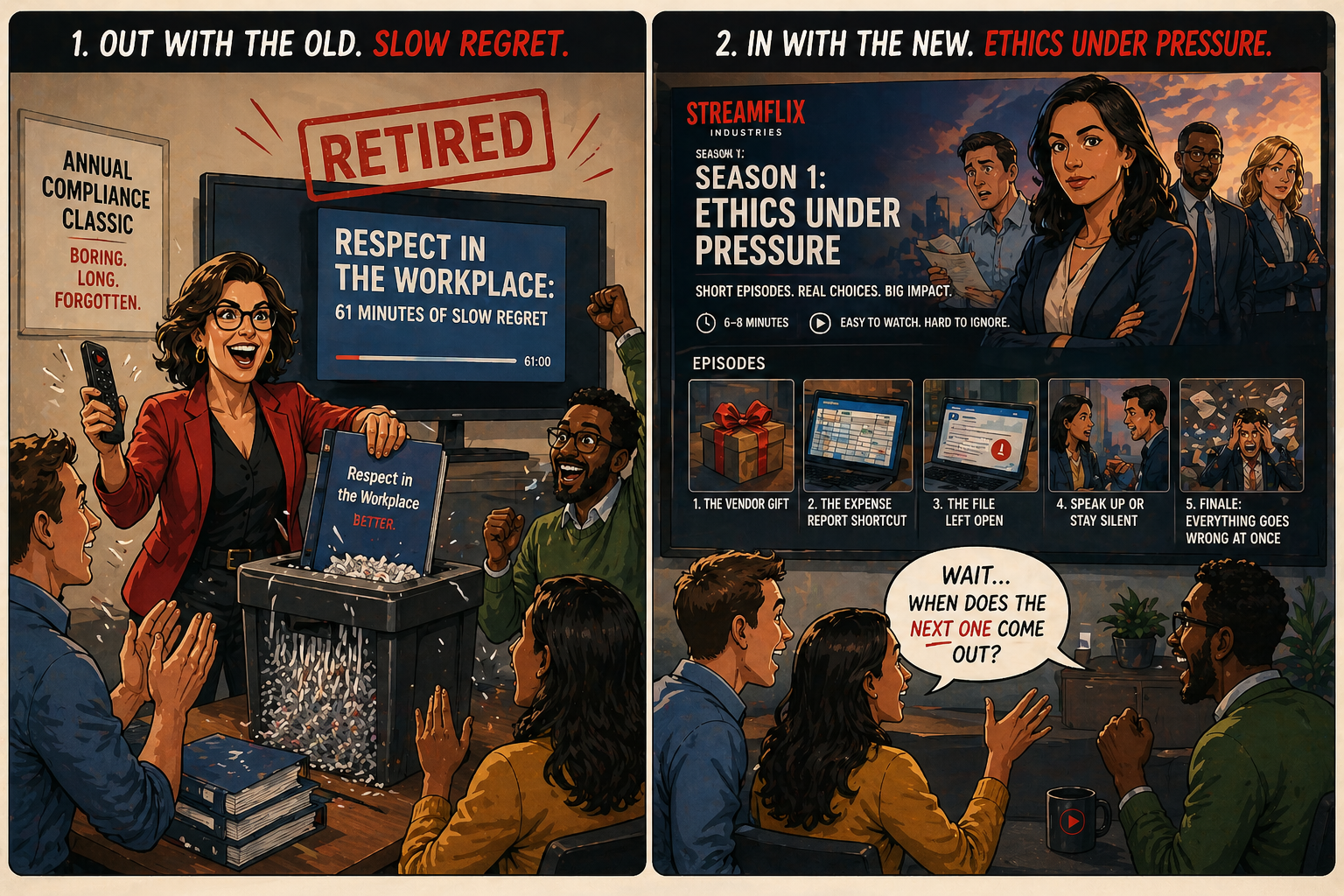
The first thing StreamFlix Industries did was retire its annual compliance classic: Respect in the Workplace: 61 Minutes of Slow Regret.
In its place came Season 1: Ethics Under Pressure—a series of short 6–8 minute episodes employees could finish without losing the will to live.
Episodes included:
- The Vendor Gift
- The Expense Report Shortcut
- The File Left Open
- Speak Up or Stay Silent
- Finale: Everything Goes Wrong at Once
Each episode ended with a cliffhanger, leaving employees saying something no training team expects to hear: “Wait… when does the next one come out?”
Bonus Episode: What Made It Work
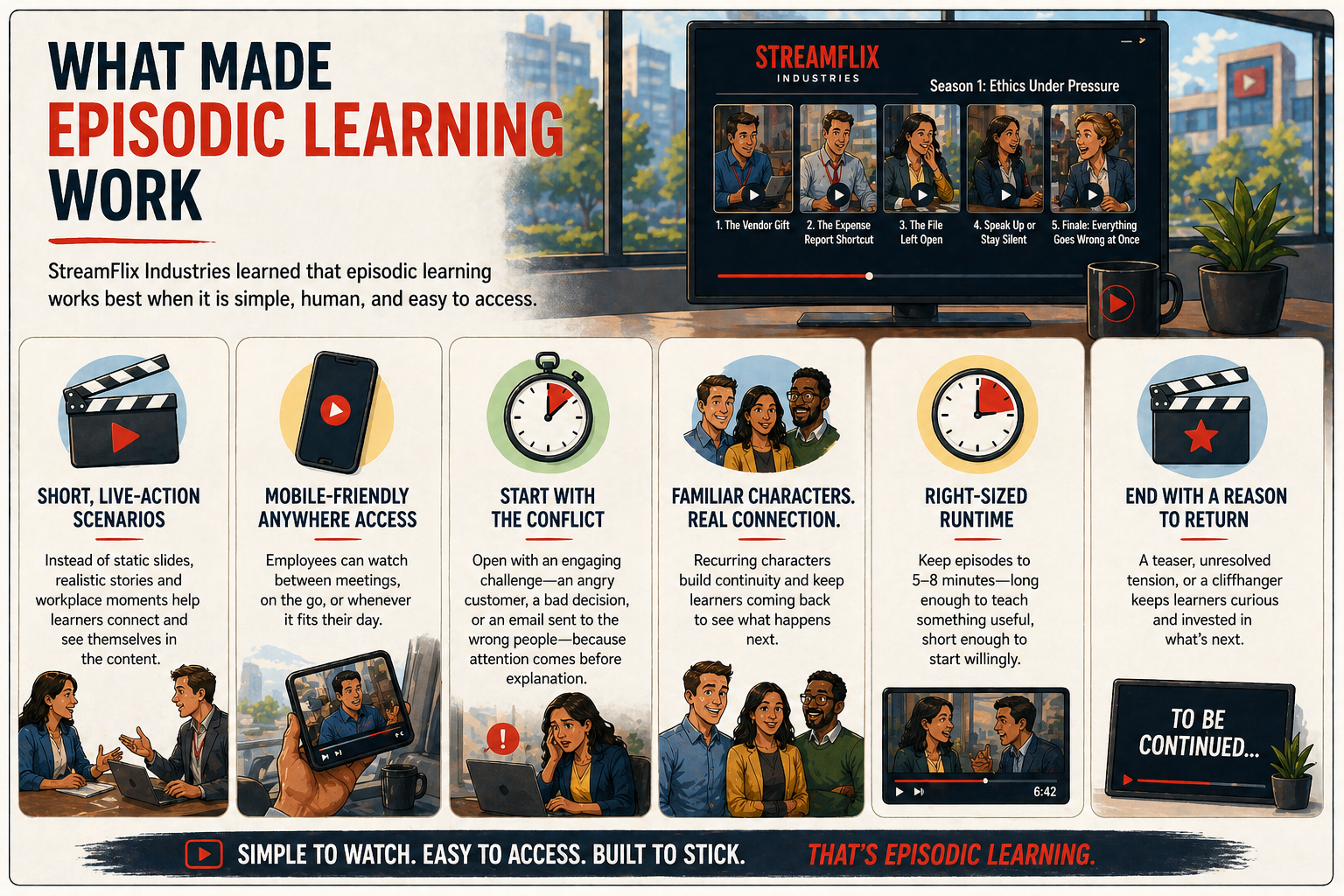
StreamFlix Industries learned that episodic learning works best when it is simple, human, and easy to access. They used short live-action scenarios instead of static slides, helping learners connect with realistic situations and recognizable workplace moments.
Each episode was mobile-friendly, so employees could watch between meetings or on the go. Openings got straight to the conflict—an angry customer, a bad decision, or an email sent to the wrong people—because attention comes before explanation.
Familiar characters returned each episode to build continuity, and runtimes stayed around 5–8 minutes: long enough to teach something useful, short enough to start willingly.
Episode Two: How They Made Training Worth Watching
The L&D team realized something important: people don’t hate learning—they hate boring delivery. So they rebuilt training around curiosity, momentum, and story.
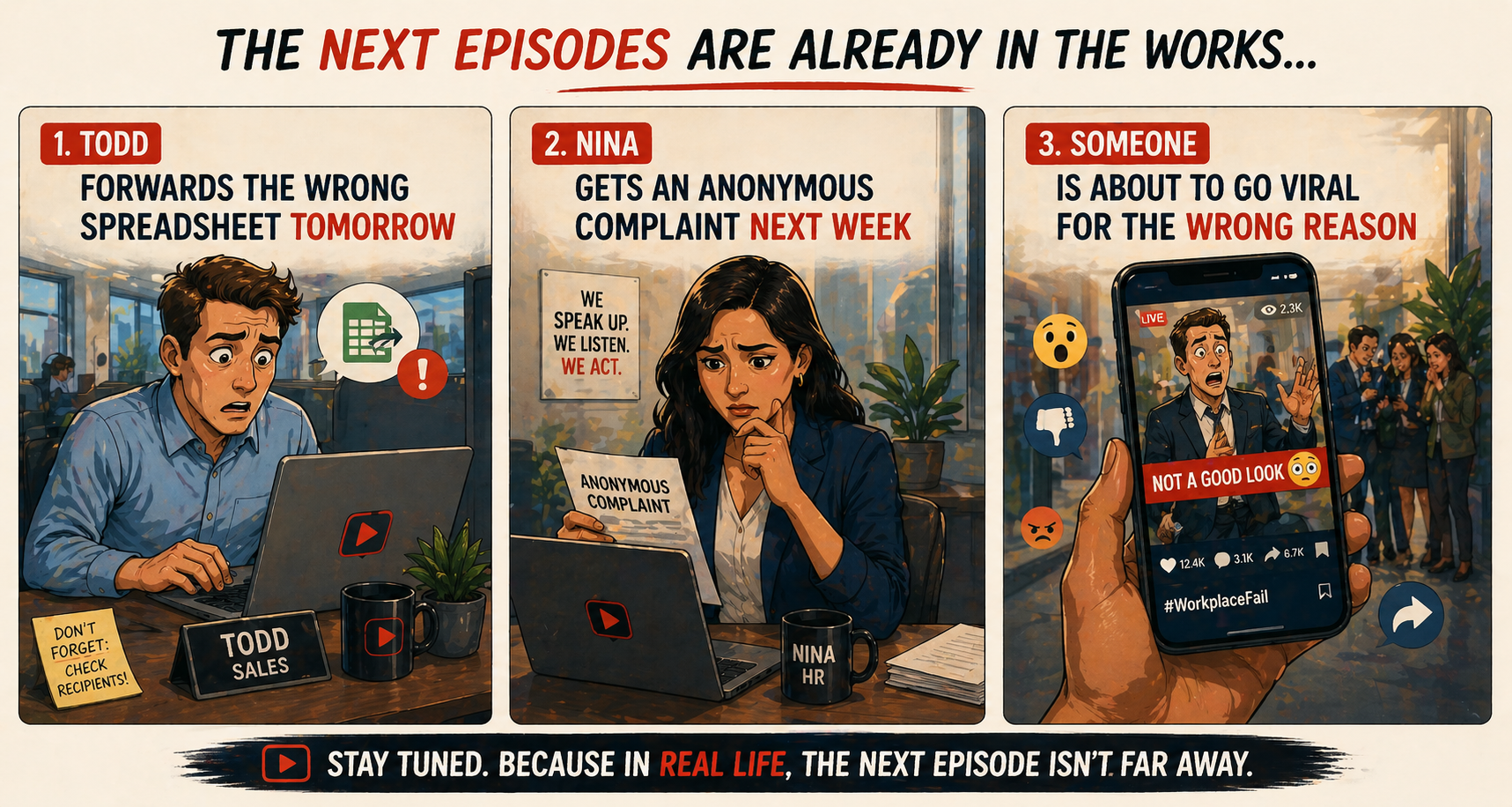
They introduced recurring characters like Todd from Sales, Nina the new manager, and Denise from HR. Learners remembered policies because they remembered people.
They also teased what was coming next:
- Todd forwards the wrong spreadsheet tomorrow
- Nina gets an anonymous complaint next week
- Someone is about to go viral for the wrong reason Completion rates rose because curiosity did what compliance never could.
Episode Three: Training Took Over the Watercooler
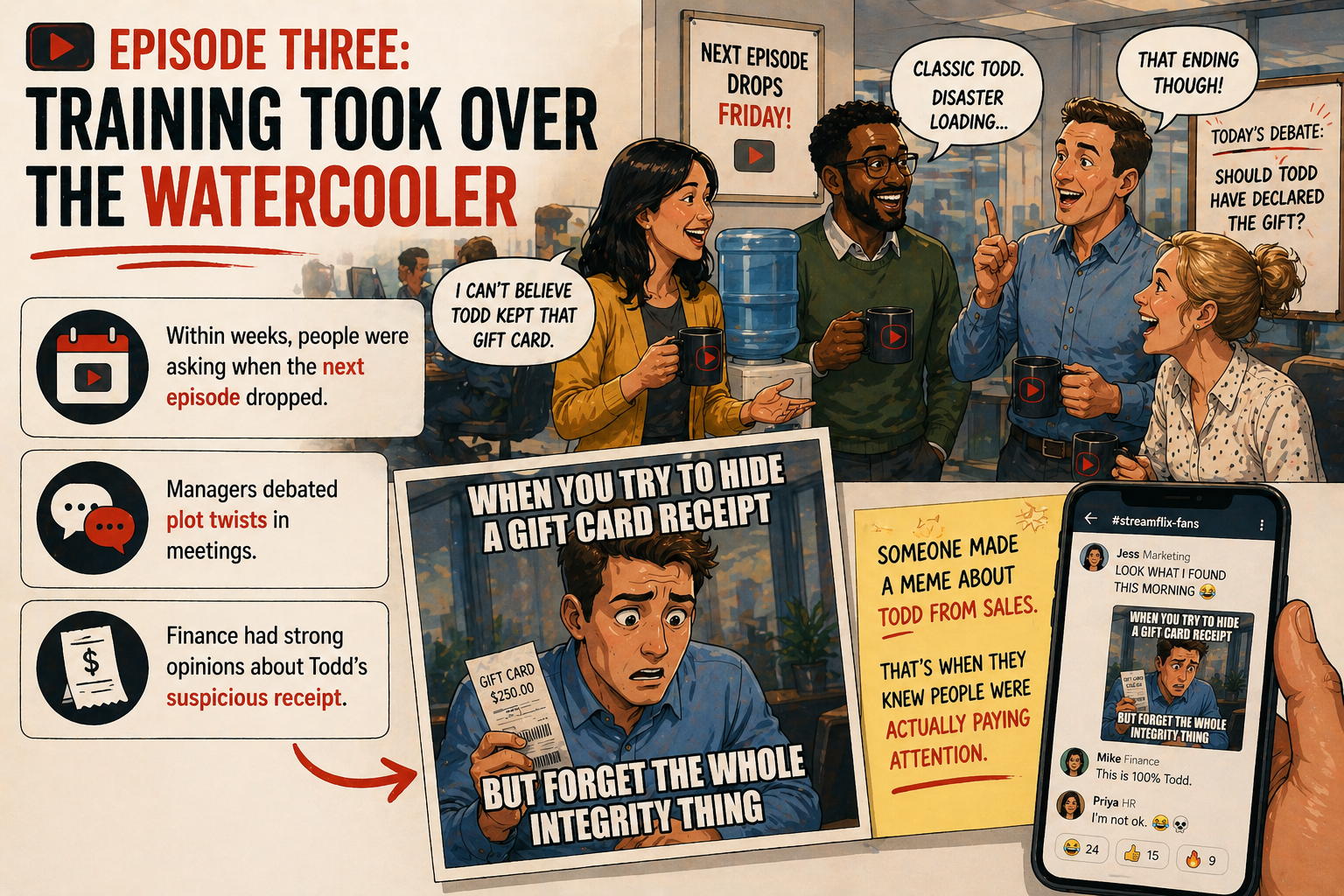
Within weeks, people were asking when the next episode dropped. Managers debated plot twists in meetings. Finance had strong opinions about Todd’s suspicious receipt.
Someone made a meme about Todd from Sales. That’s when they knew people were actually paying attention.
Episode Four: Science Entered the Plot
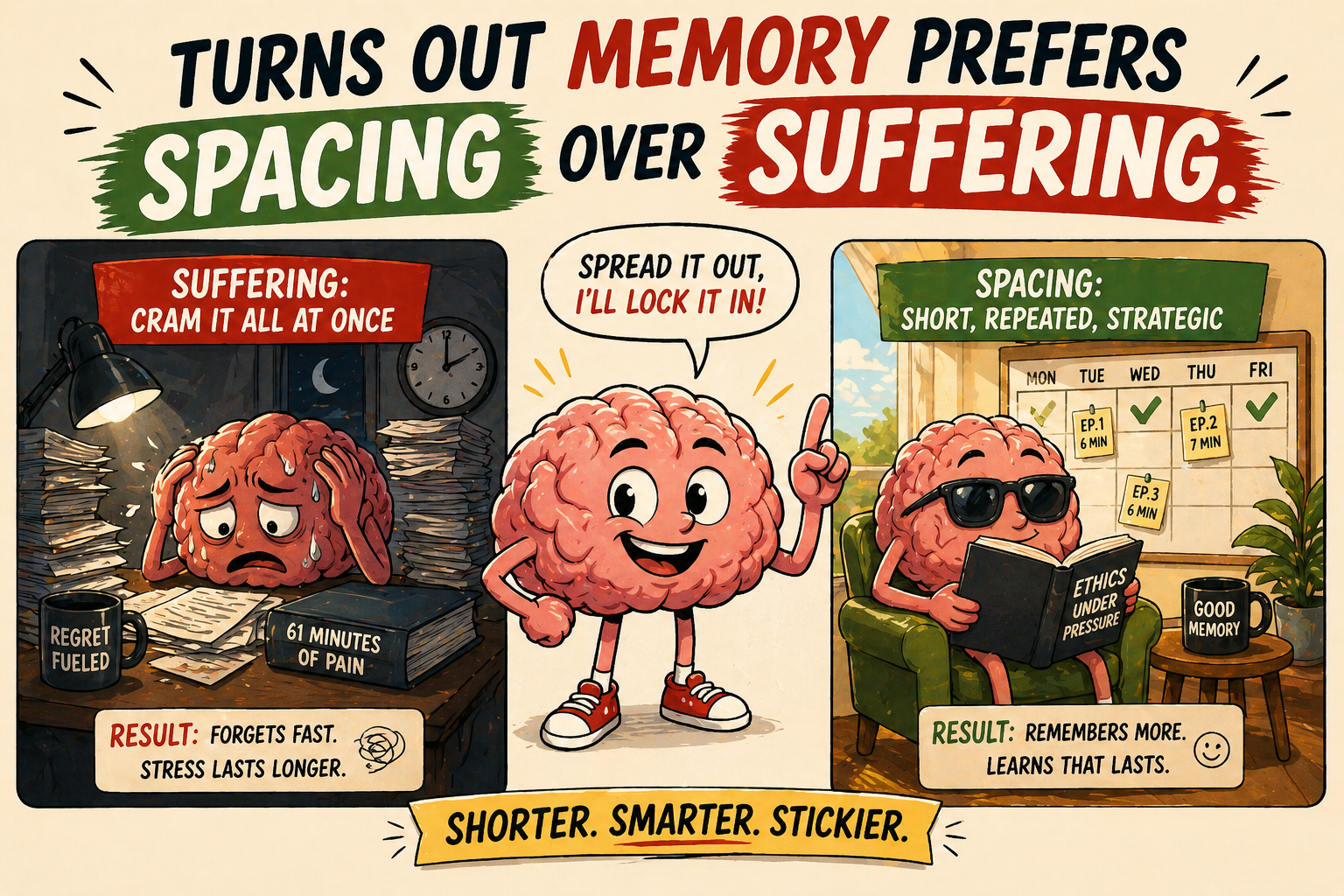
Because episodes released weekly, employees revisited ideas over time instead of panic-clicking through everything once a year. Turns out memory prefers spacing over suffering.
The result:
- Better recall
- Less overload
- More confidence
- Stronger real-world decisions
Episode Five: Every Department Wanted a Spin-Off
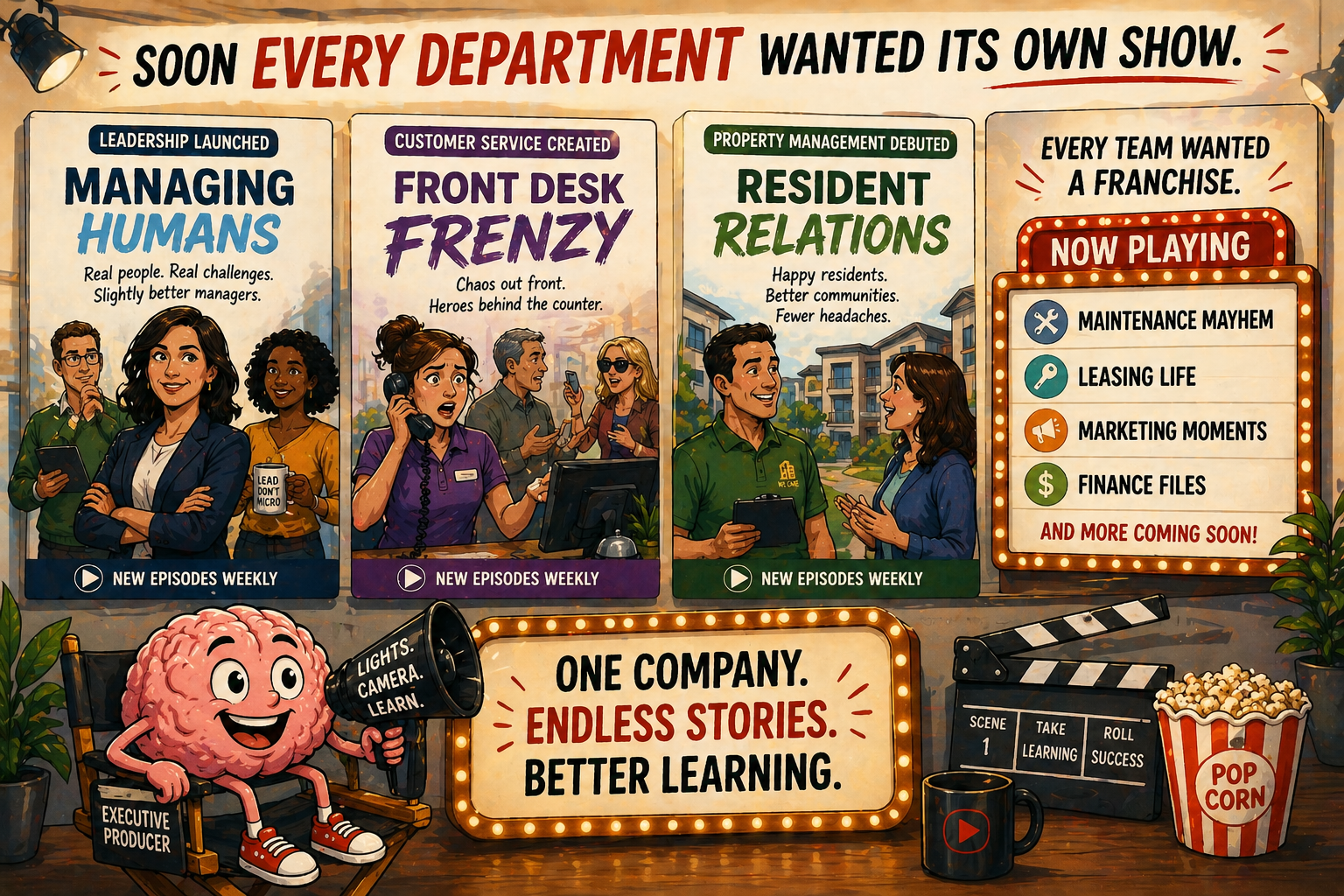
Soon every department wanted its own show.
Leadership launched Managing Humans.
Customer Service created Front Desk Frenzy.
Property Management debuted Resident Relations.
Every team wanted a franchise.
Episode Six: Why Others Got It Wrong
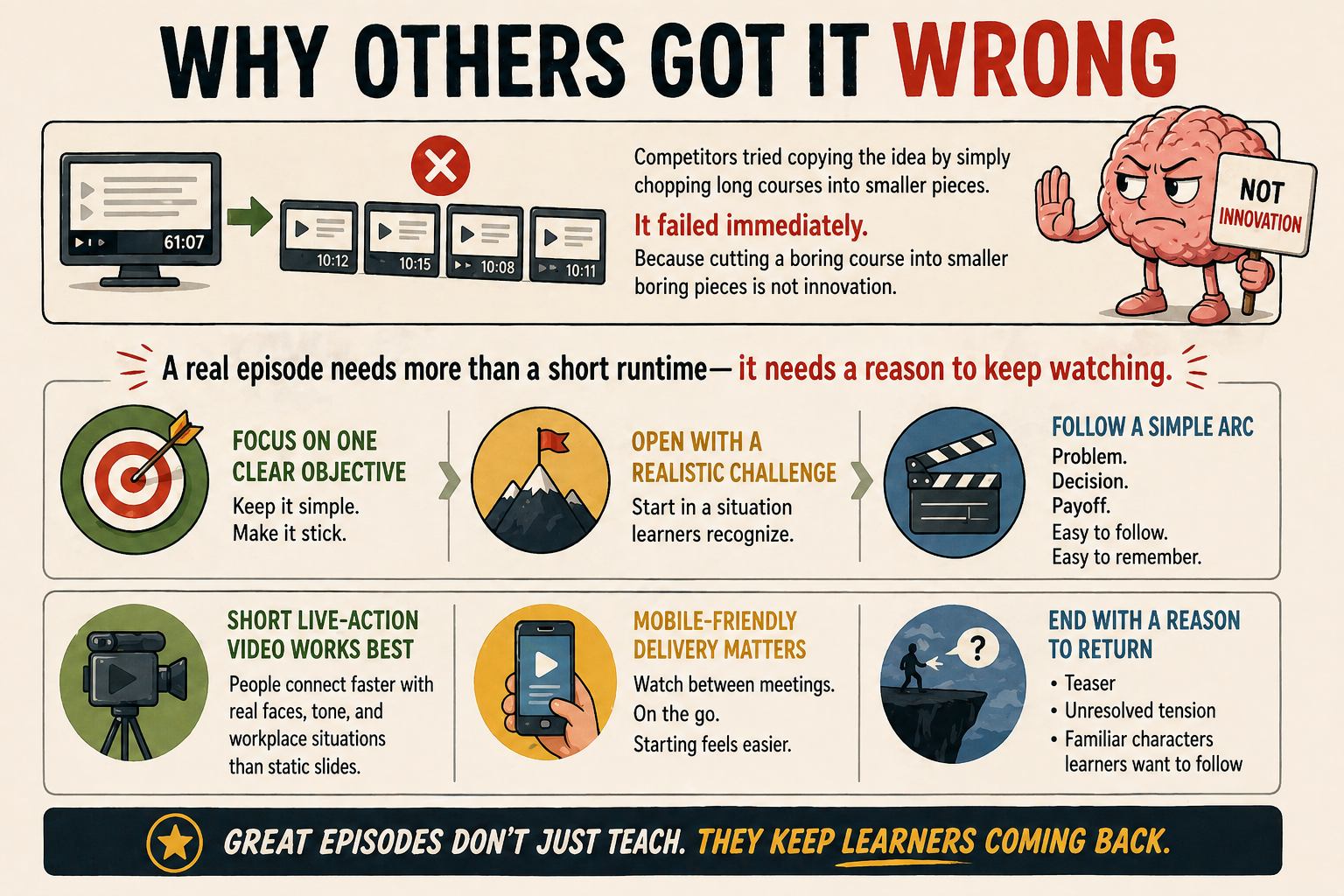
Competitors tried copying the idea by simply chopping long courses into smaller pieces. It failed immediately. Because cutting a boring course into smaller boring pieces is not innovation.
A real episode needs more than a short runtime—it needs a reason to keep watching. The best learning episodes focus on one clear objective, open with a realistic challenge, and follow a simple arc: problem, decision, payoff. That structure makes content easier to follow and remember.
Short live-action video often works best because people connect faster with real faces, tone, and workplace situations than static slides. Mobile-friendly delivery matters too—when learners can watch between meetings or on the go, starting feels easier.
Most importantly, each episode should end with a reason to return: a teaser, unresolved tension, or familiar characters learners want to follow.
Finale: Renewed for Another Season
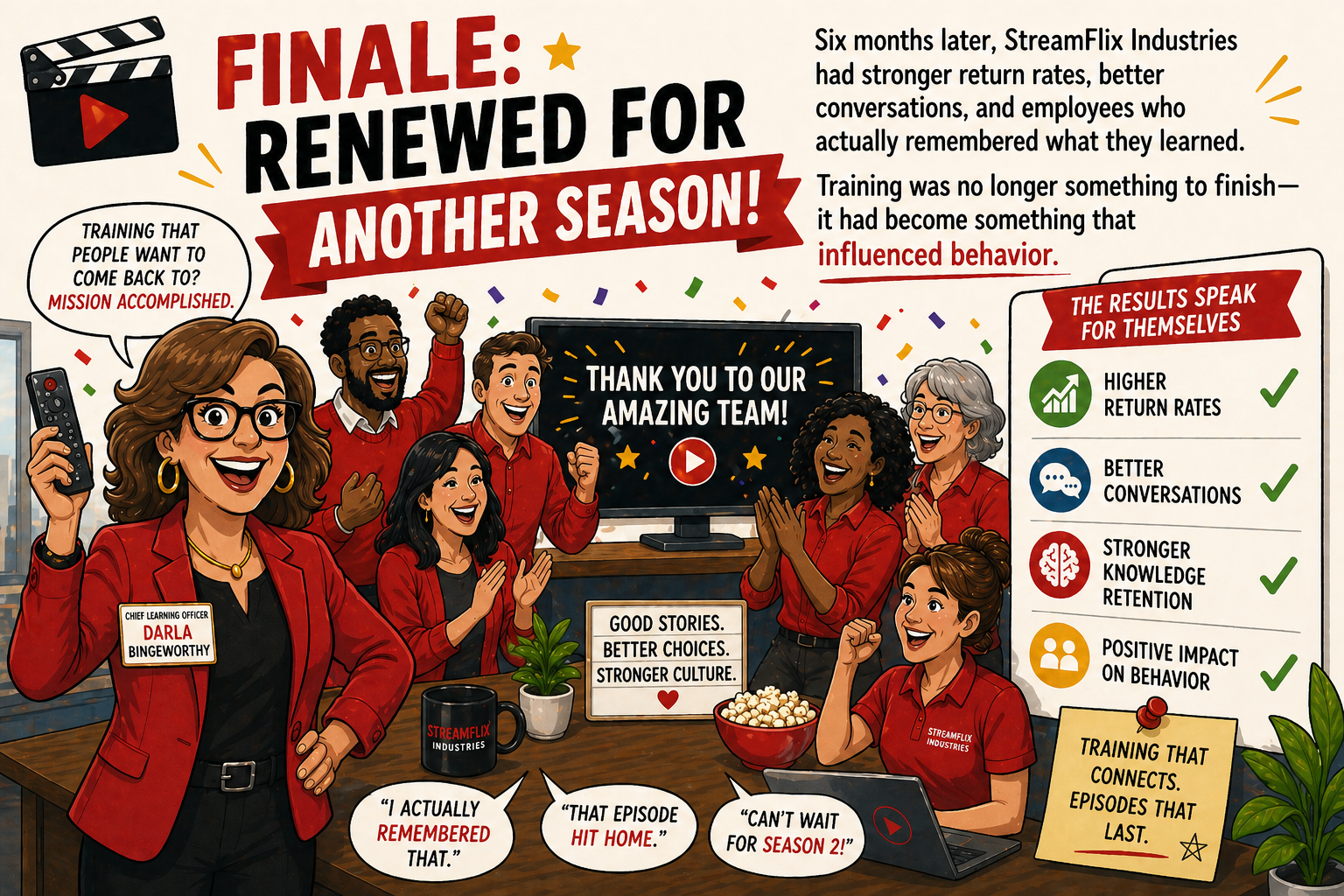
Six months later, StreamFlix Industries had stronger return rates, better conversations, and employees who actually remembered what they learned. Training was no longer something to finish—it had become something that influenced behavior.
That’s the bigger shift. Great learning doesn’t compete by being mandatory. It wins by being relevant, engaging, and easy to come back to.
The future of training may not be longer courses or louder narration. It may be shorter episodes, stronger stories, and experiences people choose to continue.
The best learning design doesn’t force attention—it earns it.
Download the Streamflix case study
Free PDF — no email required